


As a latecomer to the world of driving, a stupid mistake I continue to make is not adjusting for parking time. Combined with lots of meetings, it means whenever I go to Cyprus, I end up being late for everything.
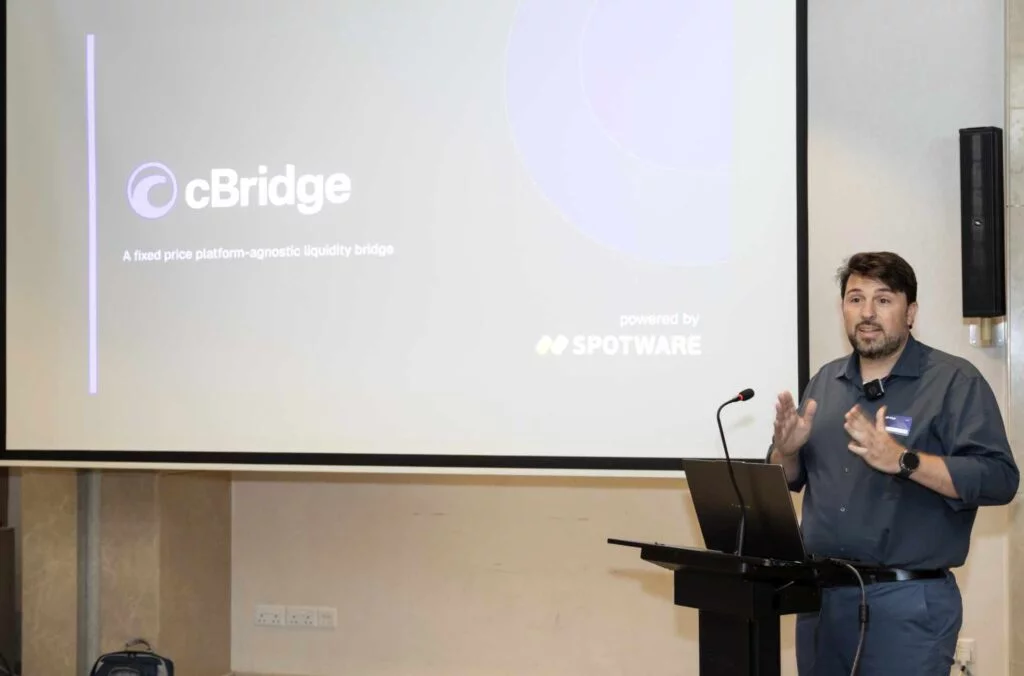
It was thus with some level of shame that I was ushered into the cBridge meetup last week. Speaking on stage were Drew Niv from ATFX, Tapaas CEO Jon Squires, and new cBridge co-General Manager Alexis Droussiotis.
Now, as you can tell from the clickbait-y title of this piece, there were three takeaways that I thought were particularly interesting in their discussion. Be warned. The last one will shock you.
- Take it slow
For a noob like myself, the most interesting part was something Jon said about managing abusive or sharp flow.
From conversations I’ve had in the past, methods for dealing with these sorts of customers tend to resemble blunt instruments.
Jon’s experience from Tapaas is that you can actually monetise this sort of business a lot more than people appreciate.
The phrase he used was to slowly ‘boil the frog’ by switching these traders to feeds or other conditions that are more suited to their trading activity.
Brokers are also in much more of a position to hedge or monetise toxic flow than they might think. The problem tends to be that they don’t even realise the flow they have is actually abusive until after the fact, meaning they cannot be proactive about handling it.
Another key point here is that doing this reduces the likelihood you’ll get hit by complaints and bad reviews. Someone who is slowly shifted to trading conditions that match their activity is much less likely to complain on Trustpilot, compared to someone who is brute-forced into them immediately or simply removed from the broker’s platform.
A final part of Jon’s arguments was that companies often view toxic flow as inherently loss-making. In reality, being able to identify flow – like reverse hedgers – means it can often become benign and monetisable.
- Stasis
One of the other discussion points that sticks out in my mind was from Alexis, cBridge’s Co-General Manager.
Alexis argued that a lot of CFD brokers and other firms get stuck with technology because of inertia internally.
Providers have technical teams that are used to working with specific technology and simply don’t want to move to a new provider, even if doing so would actually be beneficial to the company.
Drew added to this by agreeing and arguing that a common step he had to take when managing FXCM was to make decisions with majority consensus. People that continued to push back or disagree after this were simply told to – and this is my phrase – deal with it or get out. He also noted that a corporate trend away from this attitude and attempting to be accommodating to everyone is not going to work.
Alexis made a valuable argument in this part of the discussion as well. He noted that technology costs that scale stunt your business’s growth.
Because you have to keep increasing technology spend, you have an opportunity cost, where you could have invested in marketing or other parts of the business instead. cBridge does not increase costs as a broker grows. Alexis noted that this is because the actual increase in costs for cBridge are minimal as volumes flowing through the platform increase.
- No end
The final thing I found interesting, and this is more my inference of what was discussed, rather than the point actually being discussed itself, was that there is no real end to toxic flow because of the brokerage model.
Firms are competing so much on spreads and pricing. However, that pricing is like a video game version of the underlying markets that it’s taken from. For example, if you are offering insanely high leverage and spreads that are tighter than the futures market, you are opening the door to toxic flow.
Because the pressure to market those trading conditions is so great, tools like Tapaas and cBridge have to exist to help.
Drew did, however, make some good points about being more in touch with the real futures markets.
Most CFD providers do not go to underlying markets or even look at price feeds from the futures exchanges, he said. Drew also argued that an investment in futures and other exchange infrastructure, which could be $1m to $2m, ends up removing something like 80% of toxic flow that you face as a broker.
That’s peanuts for all of you, right?