



Get more trading volume with cTrader
Just over two years ago, the Spanish financial regulator put in place some of the most extreme restrictions on CFDs we’ve seen from a European regulator to date.
To quote the regulator, those restrictions mean…
“any form of advertising of the general trading of CFDs is prohibited”
The rules banned a lot of different things, including…
- Demo accounts
- Affiliates and IBs
- Sports sponsorship
- Events sponsorship

Get a Match-Trader server today
When the rules first came out there was some concern that it would mean you couldn’t list CFD products on your website.
Two years on and there have been a few responses to it and I figured it would be fun to look at what different companies are doing.
Option 1 – Do nothing
For some brands, the response so far seems to have basically been to not really do anything and keep going as usual
This seems more relevant to companies that have a broader base of products, like eToro and XTB. AvaTrade is also still doing a lot of direct marketing in Spain.

Hedge with a real prime of prime – partner with ATFX Connect today
The regulations looked like they would be particularly bad for XTB because Spain has been a big market for the Polish broker.
But if you look at eToro, they have run over 300 Google ads in Spain over the last month. However, those all use other products, like crypto, equities, or copy trading, meaning there is no CFD advertising, even if there is no ‘hiding’ of the CFD product on their Spanish website.
XTB is quite similar. However, an interesting feature of XTB’s Google ads in Spain is that a lot of them use CFDs but target Latin Americans and link to the broker’s Belize entity.
This may seem odd but there are a huge number of LATAM immigrants in Spain. Wikipedia tells me more than 1m people living in Madrid are from LATAM. I guess if they don’t have a Spanish passport you can still onboard them in Belize?

Start using Centroid Solutions to manage your risk
Option 2 – Do nothing but don’t advertise
Similar to this first group of companies are others that are not really changing anything on their site but who don’t appear to be doing any meaningful advertising.
For example, CMC Markets and Plus500 don’t restrict or block access to their websites, nor are there any major differences on them – you still have CFD trading and the products on offer.
However, neither company appears to be doing any direct advertising in Spain.
Plus500 is linking to its website on some affiliate sites using its equities product but that’s it.
As that suggests, there is also some cross selling going on. For example, if you sign up to Plus500 Invest, you are ‘in’ their ecosystem and can be moved over to CFDs.
AvaTrade was doing the same thing very aggressively with its futures product but as those products are subject to the same restrictions as CFDs, it looks like they’ve stopped marketing them so heavily.
Option 3 – Bans and restrictions
Other brokers have gone down a more cautious route and have completely restricted Spanish clients from accessing their services.
In some cases, there is a total block on Spanish customers. For example, EasyMarkets and Libertex have completely stopped Spanish clients from opening accounts with them.
Trading 212 has also removed any reference to CFDs on its website for Spanish customers. Whether the same thing is true of their app, I can’t say.
Other brands have moved to more heavily restrict access to customers.
For example, Pepperstone only takes professional clients in the country and its website has removed a lot of the products and features you see if you’re in the UK or elsewhere.
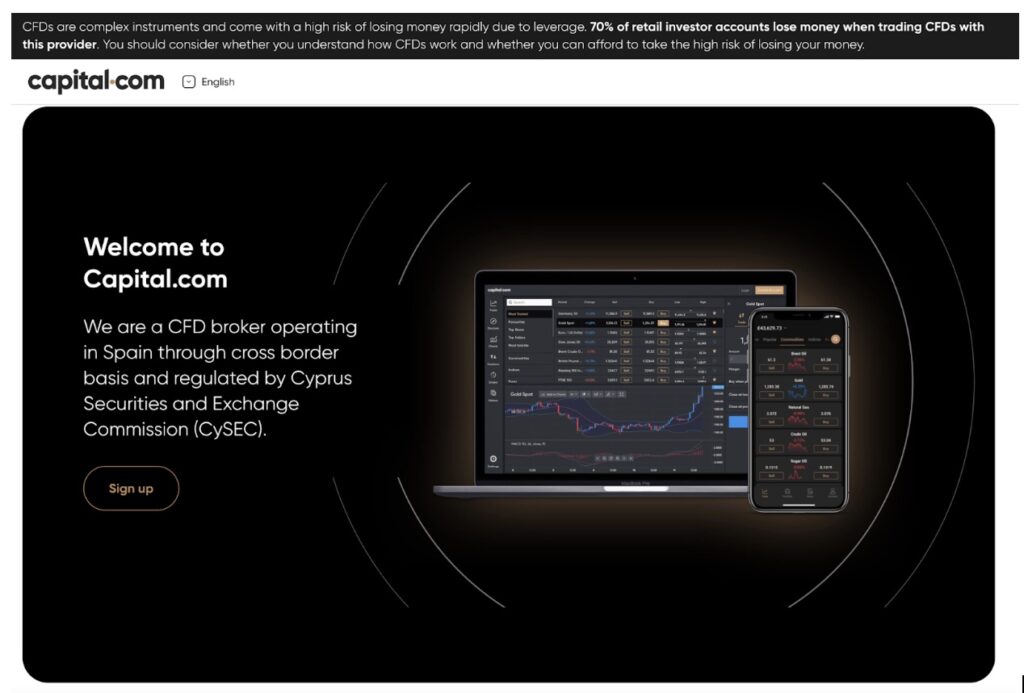
Similarly, Capital.com has a very bare bones website that massively restricts what products and services you can see compared to their ‘normal’ website.
Option 4 – Options
One of the features of the Spanish regulations is that it notes the advertising prohibition applies to any derivative product where the “maximum amount of risk is…unknown or is greater than the amount initially invested.”
The regulator goes on to note that “the only derivatives that would not meet the definition are, exclusively, purchased options or warrants.”
The only firm I can see that has really taken this to heart is IG, who only offers barrier and vanilla options on its Spanish site.
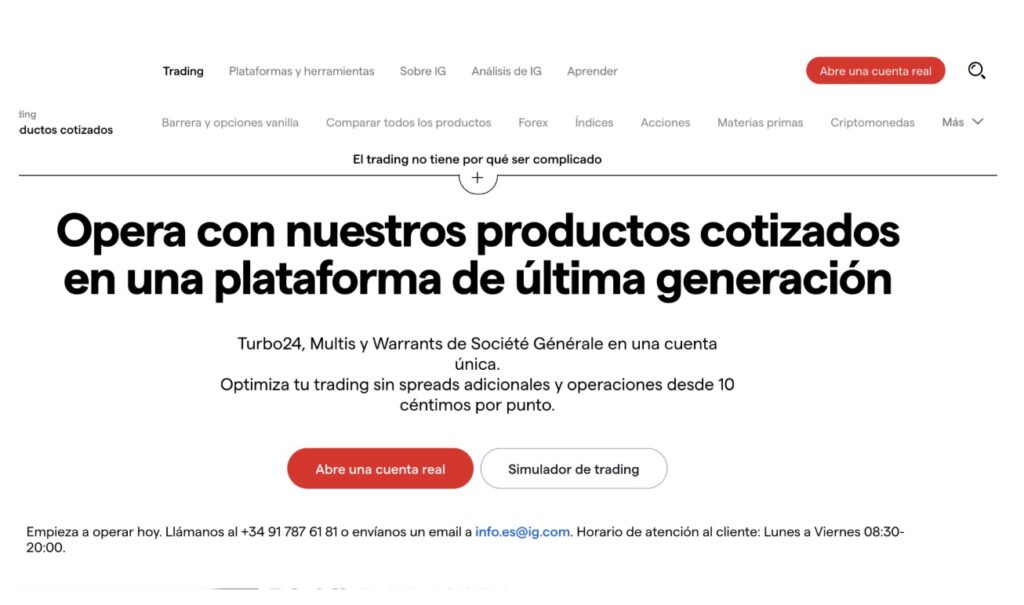
The dumb thing about this is that the leverage available with barriers is actually higher than with CFDs, plus the loss rate is exactly the same.
To top that off, Spain’s existing regulations governing CFDs would mean you (i) cannot lose more than you deposit and (ii) you have a 50% margin close out rule. So the Spanish regulator has made rules that apply to products where the maximum risk is unknown but their own existing regulations mean that the maximum risk is known.
They’re impervious to reason on anything related to this stuff – it would be like trying to explain why you should support Real Madrid to a Barca fan – so no point trying to talk to them about it.
Option 5 – Go offshore
Another simple method is to stop accepting customers in Europe and go offshore.
At least one provider has stopped passporting into Spain via their CySEC entity and instead sends customers to an offshore one. Others are taking them as customers without having an EU license.
I think this is normal given how dumb the rules are. Even dumber is the fact that the regulator will likely ‘wash its hands’ of any business that happens this way.
Out of sight, out of mind seems to be the attitude of most European regulators today.