



cBridge: Leading technology, 80% lower pricing
Recently Francesc Riverola, who is the co-founder of FXStreet, posted something about the b-book on LinkedIn. This stirred some controversy.
Since I started in this industry, the b-book has been a byword for something nefarious and evil. I often think this says more about industry executives’ own view of themselves than the actual mechanics of market making but that’s a whole other article, possibly for publication in Psychology Today.

Get real Prime of Prime liquidity with ATFX Connect
The more interesting question is – is the b-book really so bad?
First off, you often get the sense from b-book haters that ‘back in da day’ there was no b-book. This is not true.
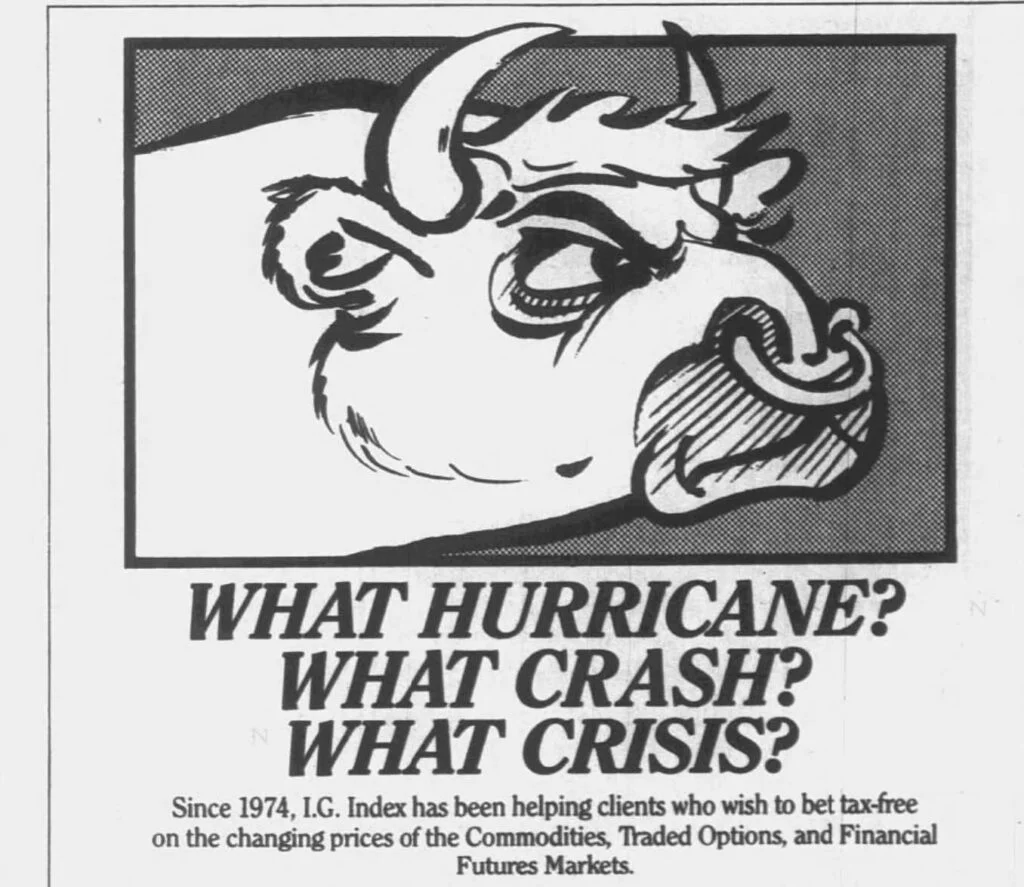
Although IG is often seen as the first broker in our industry, there was another company that predated it by a decade. That firm was called Coral Index (owned by the betting company Coral, which still exists today).
In the late 1970s, the Coral Index team gave an interview to the New York Times. Here is a quote from the company’s dealing desk manager Chris Hales, who would go on to found City Index in 1983.

Launch Prediction Markets today with Match-Trader
“We don’t hedge anything, ever.”
IG’s own founder, Stuart Wheeler, also describes taking on massive, unhedged risk during the early days of the company in his autobiography.

Hedge your crypto risk with Scope Prime
The bottom line is that taking on risk and b-booking has been with us since the start of the industry. The idea that there is a lost tradition of offering pure matched principal trading is not grounded in reality. If anything, hedging has increased substantially, rather than the other way around.
Another assumption, usually pushed by US companies like Robinhood, is that there is a ‘better’ alternative. This is usually a way of trying to sell exchange-traded products by cloaking the pitch in moral terms.

Manage your risk with Hantec Prime
In reality, most of these firms operate exactly like CFD brokers. For example, if you trade options with Robinhood, all they are doing is sending your flow to a market maker, who b-books you and then shares some of the revenue they generate with Robinhood.
Is this really that different to what a CFD provider does with a liquidity provider? Nope. Would Robinhood take the other side of those trades directly if it could? Yup. Indeed, some US firms, notably Interactive Brokers, act as market makers against their customers in products like equities and event contracts.

All the best brokers use Pelican for copy trading – why don’t you?
Another assumption is that the b-book is always a zero sum game, in which a client loss leads to the broker’s gain. In reality, most firms make money on the spread and want to make money on the spread.
We even have hard data on this. Last year, we spoke to the Head of Dealing at XTB, who said the company makes about 60% of its OTC revenue from spreads, 20% from swaps, and 20% from market making.

Manage your broker’s risk with Centroid Solutions
You can see this in options trading data published by Cboe as well. A few years ago, I wanted to look up the impact that growing 0DTE options trading might have on underlying markets via the hedging of residual exposure.
Cboe published data which shows that, although volumes are large, the actual net exposure 0DTE options create for market makers – at least on SPX – is very low because clients overwhelmingly net each other off. I would be very, very surprised if it was any different for CFD trades.

26 Degrees: Optimised precious metals liquidity for your brokerage
More importantly, brokers want to make money on the spread, not one way positions where they trade against their customers. The idea that a CFD broker desires huge levels of one way flow, which they can then ‘b-book’ to monetise client losses, is just not true.
When there was a large gold rally towards the end of last year and into January, I did not get the impression lots of brokers were celebrating the fact that they had the opportunity to take on huge risk against their customers. Quite the opposite.
Moreover, b-book haters make it seem like the 20% of revenue a company like XTB makes from the b-book is some deeply thought out, perniciously driven revenue line, in which the dealing team sits around, laughing evilly, as they identify profitable traders and look at ways to screw them over.
But in reality, all the majority of firms are doing – broadly speaking – is looking at their book’s exposure on an aggregated level and then hedging off the back of it. This is effectively passive flow – there is no desire to read the market or try to take a position in whatever underlying instrument is being traded in. This is also – I think – the logical thing to do, because it makes you long volatility and acts something like a tail risk hedge. It is also why companies like Citadel or XTX have historically wanted to take CFD providers’ flow – it’s typically very easy to monetise.
Of course, if a broker does have a client who cannot be monetised, then they will likely be switched off. However, note that there is a distinction between someone who cannot be monetised and someone who is profitable but can still generate revenue for the business.
To top that off, this exact same thing happens in the institutional space. If you are consistently trading OTC with a counterparty that cannot monetise your business, they will shut you off. The notion that this is limited to CFD providers who run a book isn’t true.
Finally, the idea that an a-book firm – something I think doesn’t even exist in an OTC market, a better phrase is ‘matched principal’ – carries no risk isn’t true. The credit risk, largely created by the gap between margin offered to clients and margin required by a prime broker / liquidity provider, is itself a massive risk. We saw this most notably with the Swiss Franc debacle over a decade ago.
So where does the b-book hate come from? I think there are a few factors.
B-book haters are correct about their assumptions in cases where brokers, particularly if they have low cash levels on their balance sheets, offer ridiculously high rebates to their marketing partners.
If you are paying out a huge proportion of your spread to IBs or other marketing partners, then by definition you have to find money elsewhere. This has to be in rollovers or in taking on risk. As there is not much you can do with rollovers, it effectively means taking on more risk.
When you are a small provider, this does indeed massively increase the conflict of interest market making can create because you start to be in a position where you genuinely need clients to lose in order to survive. The collapse of YaMarkets, which we reported on at the end of last week, appears to have been precisely because of this. They were paying out huge rebates to partners and then couldn’t sustain their business when gold continued to rise.
There are two other factors that I think are important as well in driving the ‘b-book is the ultimate evil’ concept.
Firstly, in the late 2000s and early 2010s, brokers themselves began heavily pushing the concept that they are ECN, no dealing desk, pure STP etc etc. This was never true but was for marketing purposes.
However, I think the impact of this was to bring into reality something that didn’t exist previously. To use a different example, in the 1930s De Beers marketed a diamond engagement ring, when an engagement ring was not really a ‘thing’ before. So marketing created the ring, rather than the ring creating the De Beers campaign.
In the same way, brokers, by trying to make themselves seem ‘legit’ by talking about how they don’t b-book, created the idea of there being such a thing as a no b-book broker.
Finally, I always think there is a divide in the industry between the spread betting origin story and the ‘forex’ origin story. Because ‘FX’ is a financial product, and there is more ‘prestige’ to working in financial services, many providers don’t like the idea that they are involved in something that is connected to gaming.
In contrast, if you talk to people who worked in the industry ‘back in da day’ in the UK, they see what they are doing as something akin to gambling. And indeed, for over 30 years, spread bets in the UK were regulated by the Gambling Commission, not the FCA. Seen in this way, the b-book concept isn’t really a big deal, which is probably why Hales was happy to say openly that Coral didn’t hedge anything.
Or as IG founder Wheeler put it in an article he wrote in the Spectator magazine back in 2013…
“All spread-betting firms are bookies, whatever gravitas they may attempt to assume.”
But what would he know, right?