Last month Spotware formally introduced cBridge, its new bridge product, and recently launched a dedicated website for it.
It also marked Spotware’s pivot to becoming a multi-product company.
So why did the company decide to head down the bridging path and what are the plans for the new bridge?
We talked to Ilia Iarovitcyn, CEO of Spotware Systems, to find out.
DK: Spotware is well known in the platform space. Why did you decide to launch this new product?
II: Last year marked a major milestone for Spotware, as we clearly showed the industry that we had moved beyond being a single-product company. The launch of cBridge represents this strategic expansion. For years, cTrader offered direct connectivity to liquidity providers within the platform, but clients were consistently asking for a standalone bridge with broader functionality beyond basic liquidity routing. Launching cBridge was our response to that demand and an important step in broadening Spotware’s offering for brokers.
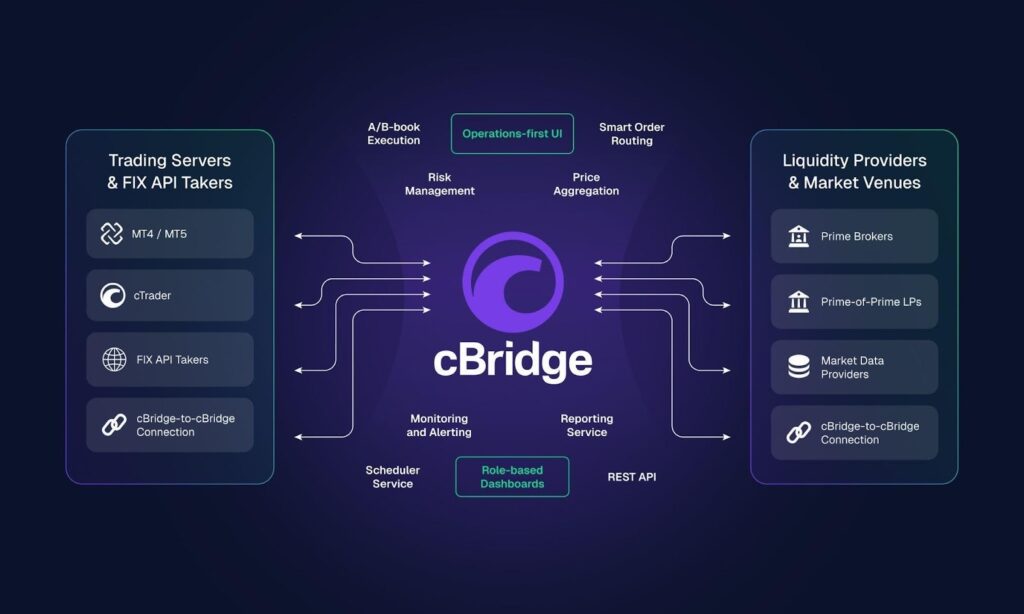
This includes a liquidity bridge that connects to any type of trading platform – MT4, MT5, cTrader, FIX API Taker. Alongside this, cBridge also includes an anti-fraud service and other tools designed to meet broker demand for a clean and simple brokerage infrastructure setup.
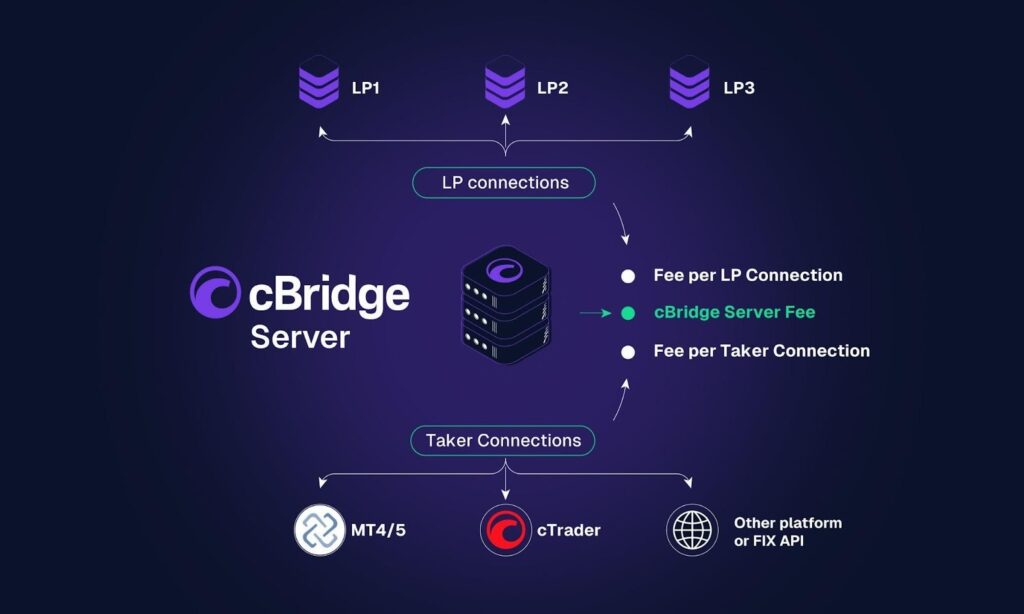
Within this, we introduced a specific pricing model built on a simple principle: bridge fees should reflect the actual infrastructure resources required to run a bridge, rather than being directly tied to trading volumes. Such an approach helps brokers cut costs by up to 80% compared to a legacy provider.
DK: On pricing, you mentioned up to an 80% cost reduction. Commercially does that hurt you and are you concerned about the sector heading to a race to the bottom on fees?
II: Our view is that as a broker grows, its cost model should remain sustainable and predictable. Our infrastructure-based solution makes pricing transparent and helps brokers scale with more confidence.
But price should not be the main differentiator. Stability, performance, feature flexibility and product design should be. That is why we built cBridge with an operations-first design approach to make it easier to use and navigate. Our pricing model followed naturally, it is not our primary focus. Instead we are focused on delivering a strong solution.
DK: We have seen competitors roll out advanced features such as markouts and toxic flow analysis. What features will differentiate your product?
II: We see the same trend, markouts reporting integrated with automated routing, for example. We are approaching this in a similar way – with markouts reporting and smart routing optimisation through added automation.
Our goal is for cBridge to become a cornerstone of risk management, not just a pass-through liquidity bridge connecting platforms and liquidity providers, but a system that can do everything a broker needs, like segregating toxic flow and automatically applying routing rules to different trader cohorts.
DK: Presumably you got some feedback from brokers during the product development process? What were their requests?
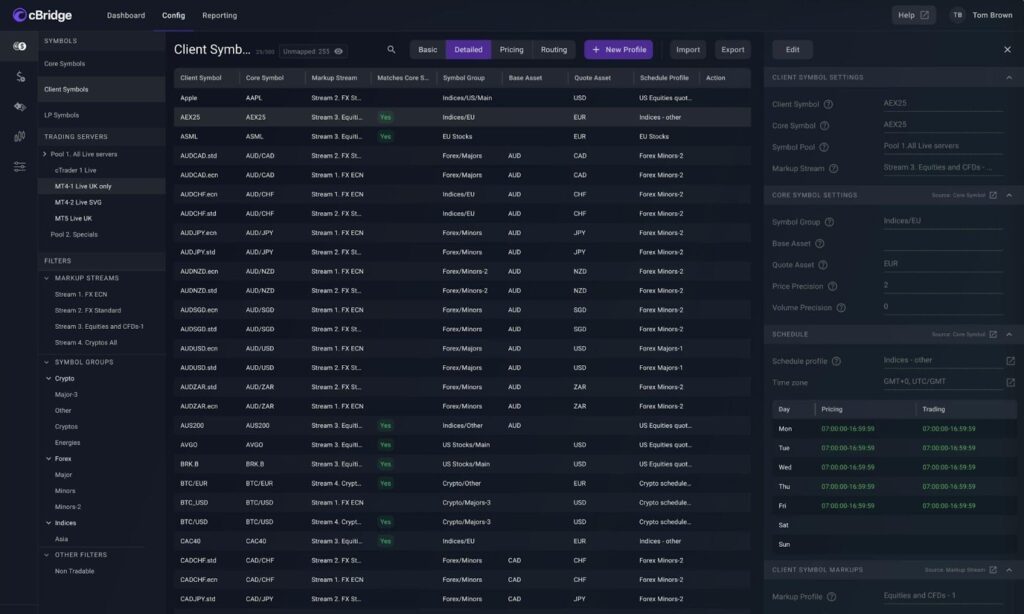
II: Most requests come from risk management, dealing and trading teams. These include custom market depth, additional smart routing conditions such as client volume, country or trade side, more liquidity provider integrations, business metrics in dashboards, real-time pass-through analytics and a trading interface for risk and dealing teams. One area we have significant plans for is real-time dashboards covering both pass-through and business metrics. That was based on feedback from trading teams.
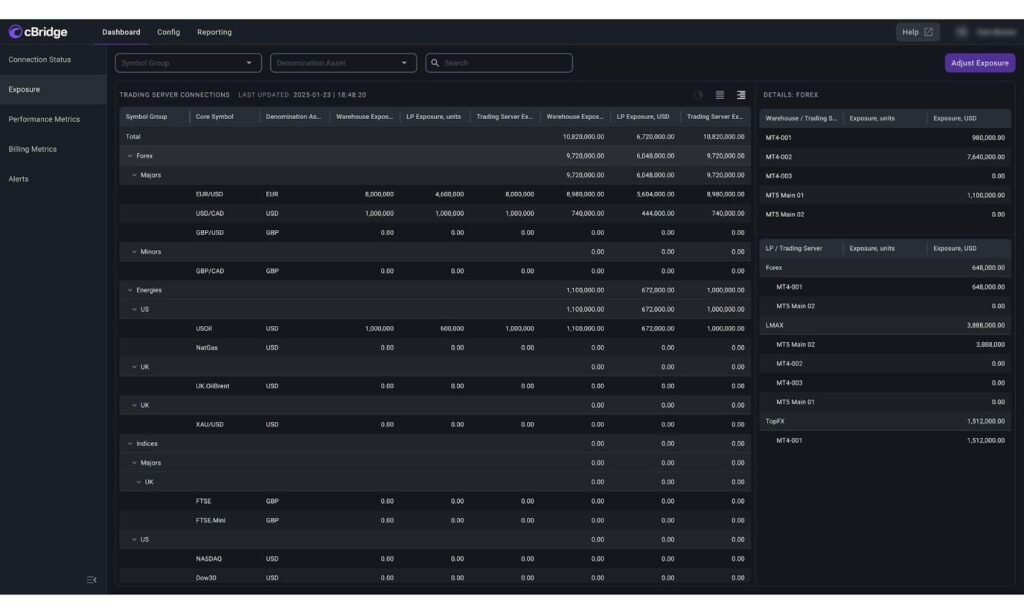
DK: Are you close to implementing these already or are they still a long way away on the roadmap?
II: Some are coming soon and others remain on the roadmap. We are in close communication with brokers and deciding which features should come next and which will follow in later releases.
DK: cTrader has become very big in the prop space – do you see different demands on the bridge side for props compared to brokers?
Yes, as cTrader expands in the prop space, we’re seeing a shift in what firms expect from the bridge. Prop firms tend to put more emphasis on features that help them manage pricing and execution rules, like custom market depth, automated markup management and scheduling. We’re set up to support those requirements and cover everything they need.
DK: How do you compete with established bridge providers in the space, given their long track records?
II: We respect established players and many of them defined the liquidity bridge category. For us, competition is not defined by company age, but by execution quality and how well you respond to client demand.
Migration is a good example. When a broker moves to cBridge, our team handles a large share of the work: setup transfer, configuration mapping, installation, and support with exposure migration. The goal is to take that workload off the broker and make sure migration doesn’t become a blocker.
That reflects a broader advantage behind cBridge: speed, operational support, and economy of scale. Spotware is a large company with strong and experienced teams: many core bridge capabilities had already been part of cTrader for years, laying a strong foundation for cBridge. We avoid repeating legacy development patterns and instead focus on features that matter most to brokers, delivering them quickly.
DK: How is the bridge hosted? Do brokers run it themselves?
II: We host all our solutions. Both cTrader and cBridge run on our own institutional-grade infrastructure in Equinix data centres. That means brokers do not need to manage hosting and maintenance themselves or allocate dedicated system administrator and DevOps resources to support it. We remove that operational burden for clients, reduce their infrastructure costs and can therefore offer a fixed pricing model.
The infrastructure itself is designed for low latency and high resilience. Our UK and US setups bridgerun across fully redundant Equinix data centre locations linked by physical cross-connects. Inter-site links are aggregated and backed up.
We also use direct cross-connects and peering with LPs and client infrastructure. This reduces reliance on the public internet and helps keep network paths shorter and more predictable. It also lowers latency, jitter and packet loss, and supports faster, more transparent failover if a link, device or site goes down.
For a number of LPs, we maintain physical connectivity with primary and backup BGP sessions. Access to cloud infrastructure and client AWS environments can also be provided through Equinix Fabric, making connectivity more reliable and secure. If required by regulation or client preference, we can also offer on-premises deployment in the future.
DK: The last few months have been very difficult for the industry. Have you seen any shift in demand from firms, in terms of features or tools they are looking for?
II: Yes. With recent volatility spikes around gold, brokers are now putting far more focus on core risk controls, like limits on open positions and overall exposure, along with clearer, more informative dashboards.
At the same time, we’re seeing stronger demand for tools that measure LP execution quality – slippage, fill rates, rejections and markouts – and for embedding toxic flow analysis signals directly in order routing rules. We’re also pushing deeper integration with external risk monitoring tools, giving our clients access to metrics like position holding time and PnL dynamics.