

The Hantec Prime team will be at the iFX Expo in Hong Kong next week.
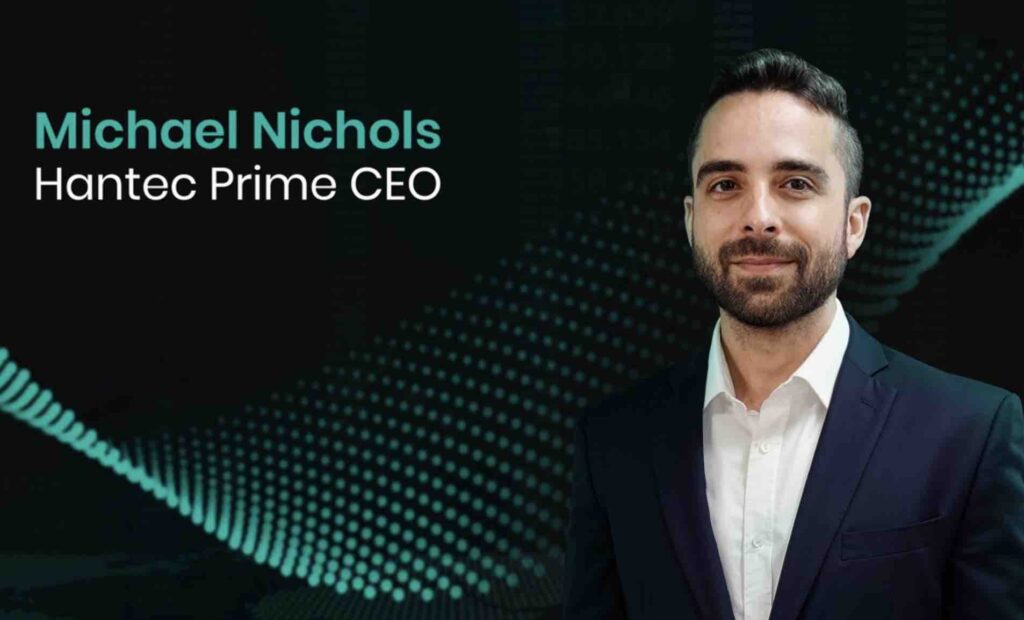
In the run up to that, we spoke to newly appointed CEO Michael Nichols, who will be attending the expo, about how brokers can have the smoothest, most profitable relationship with their liquidity provider.
LPs can often be opaque with how they handle flow, meaning brokers don’t know what happens after they hedge with them. Does this matter? Should brokers care what their LP is doing with the flow they send them and why?
Yes — this matters a great deal. Brokers should have a transparent, candid conversation with any Liquidity Provider about how incoming order flow is handled. The downstream treatment of flow directly affects the conditions a broker receives: if a Liquidity Provider internalises flow versus passing it downstream, pricing, fills and the potential for revenue sharing can differ materially.
As we gear up for iFX Expo Asia in Hong Kong, our conversations at events always trickle down to a problem of unsustainable expectations and how we can make it realistic for Liquidity Providers and the Broker.
When expectations are unclear, disputes can follow — for example, conditions that were offered initially may no longer be sustainable if the flow profile changes. That’s why brokers should insist on clarity up front: how flow is classified, whether it is internalised or passed through, and what triggers any change in pricing or execution policy.
At Hantec Prime that transparency is embedded in how relationships are managed — combining hands-on dealing experience with institutional technology so brokers understand both the mechanics and commercial consequences of flow management.
It can feel like some brokers treat their LP as an exhaust pipe by keeping all the soft flow for themselves and dumping all their sharp flow on to their LPs. I am assuming this is not going to end well. What happens if brokers do this from your point of view?
It’s not sustainable. Passing sharp or abusive flow without prior agreement erodes trust and forces the Liquidity Provider to protect itself, often by segregating accounts, adjusting pricing, or routing risk elsewhere. That, in turn, changes the economics for the broker.
Sharp flow increases execution and balance-sheet risk for both sides. A healthier long-term approach is to be transparent about your flow mix and agree account types or routing policies in advance.
At Hantec Prime we work with clients to identify flow characteristics early and design order books that preserve fair economics for both parties — protecting execution quality and maintaining stable conditions.
On that point, how useful is some kind of agreement or conversation about the nature of the flow being sent before you start working with your partners? For example, a lot of retail brokers face problems with sharp gold traders. If you’re aware of that before you start trading with them, can you be accommodating of it?
An upfront conversation is essential. We routinely request recent trading statements because a detailed flow analysis allows the Liquidity Provider to tailor pricing and risk limits appropriately.
With that insight, accommodating concentrated strategies — for example, high-frequency or sharp gold trading— is often possible, but it may require structural adjustments such as bespoke order books, tiered pricing, or dedicated risk corridors.
At Hantec Prime this is standard practice: we analyse flow profiles and construct tailored liquidity solutions — including competitive gold pricing, say 7–9 cents where appropriate — to align client needs with sustainable risk management.
Something we hear is that abusers are becoming more sophisticated. Brokers may not even realise that it’s happening. Can Hantec Prime help handle these sorts of problems?
Absolutely. As threats evolve, single-book analysis by a broker can miss cross-client patterns. Because we aggregate and monitor flow across a wide set of clients, our risk team can identify emerging abuse patterns far faster than an isolated broker book can. That collective visibility, combined with 35+ years of dealing and brokerage experience, makes us an effective first line of defence.
If we see similar anomalous flow across several clients, that triggers immediate investigation — distinguishing genuine market events from potential abuse — and we proactively advise affected clients on mitigation strategies before problems crystallise.
One of the things we’ve seen a lot of discussion of recently in the industry is safety of funds. How does Hantec Prime ensure its partners’ funds remain safe?
Fund safety is fundamental. Hantec Prime operates within a multi-jurisdictional regulatory framework and segregates client funds in reputable, regulated banks. Segregation, transparent reporting and robust operational controls are the baseline.
In addition, our custody and operational arrangements are supported by established governance and ongoing oversight, which together reduce operational risk and protect client assets.
What can brokers do to work with an LP like Hantec Prime to become more profitable?
Profitability starts with open communication and data sharing. The more visibility a Liquidity Provider has — for example, through routing tags or trading statements — the better it can identify heterogeneous accounts and segregate flow that would otherwise contaminate a pooled book. This allows for targeted pricing, better execution and fewer surprises.
Leverage the Liquidity Provider’s experience: ask for flow analysis, consult on account types, and adopt best practices around routing and tagging. Hantec Prime combines deep liquidity, bespoke flow management and hands-on dealing advice so brokers can optimise spreads, reduce slippage and protect P&L.
The standard model for brokers seems to be to capture spread, hit a risk limit, then go hedge. Can brokers do more than this to manage their risk? Does Hantec Prime do anything to help them with this?
That model is the right starting point — managing net open positions (NOP) limits and hedging when thresholds are reached is core risk hygiene. Beyond that, brokers should actively monitor flow quality, analyse account segmentation and consult with their Liquidity Provider when a flow profile is ambiguous.
Hantec Prime supports clients beyond execution: we provide bespoke flow assessments, help design account- level rules and offer ongoing consults to spot risky patterns before they threaten the balance sheet. The goal is to treat the Liquidity Provider as a strategic partner in risk management, not just a counterparty.
As a more mundane question, are there any common mistakes you see brokers making with their LP? That could be how they manage risk or the relationship with their LP?
Yes — and most are avoidable. A recurring mistake is attempting to mix abusive or toxic flow with normal retail flow without disclosure. That contaminates pooled liquidity, prompts corrective measures from the Liquidity Provider (which often means worse conditions) and leads to disputes.
A better approach is to be upfront: disclose account types, tag flows, and consult on whether certain clients should be routed to a separate execution pathway. At Hantec Prime we emphasise regular communication — daily or weekly consults where helpful — so clients understand pain points, expected behaviour and any corrective steps before they become disputes.
That transparency preserves pricing, protects execution and builds long-term partnerships.