

It seems like almost every other week over the last 12 months, I get sent a press release with some update involving GCEX.
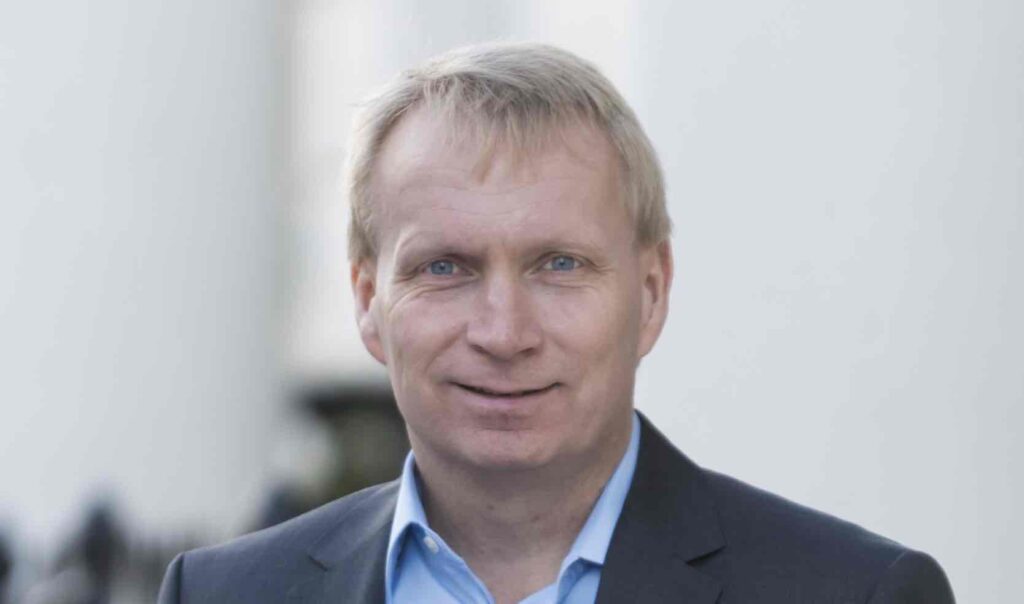
The company, which was launched in 2018 by CFH Co-Founder Lars Holst, provides a range of liquidity and technology solutions to brokers and other financial institutions.
I spoke to Lars in 2018 when the idea was to have a ‘crypto broker in a box’ solution. The firm has obviously moved quite a long way beyond that.
We spoke about what GCEX has been up to since then and what the company’s plans are for the long-term.
This may seem an odd question to start but shouldn’t you be relaxing on a beach somewhere? You obviously had huge success with your prior ventures. What motivated you to keep going and launch GCEX?
I wasn’t even 50 when I founded GCEX so I think I was way too young to consider retiring! But it’s not just a question of age – I am really motivated by growing businesses, building teams, and driving meaningful change. GCEX is a big part of that, but it’s not my only focus – I’m also involved in a number of other ventures.
After working in FX for more than 25 years, it felt like the right time to apply that experience to a new area where technology and regulation are developing quickly. Moving into cryptos was a natural next step. There’s a genuine use case for digital assets, and this really appeals to me. What we’ve built at GCEX goes beyond speculative trading; we have developed products that enhance cross-border payments and aim to generate yield opportunities for institutions.
Cryptos serve a real purpose and have huge global potential, so for me, building a business in this sector is extremely motivating. And I guess the reality is that I don’t like golf and I’m not dreaming of relaxing on a beach somewhere – so retirement at this point doesn’t appeal to me.
You were previously very involved in the FX space. Has moving more into crypto brought any positive surprises for you? Do you think the crypto industry was doing anything novel or new that you liked? And vice versa, as we see more and more currency trading execs move into crypto, do you think they have brought expertise to the table that was lacking previously?
What’s most striking about crypto (or digital assets or virtual assets) is the rapid convergence with technologies like AI and smart contracts. Crypto isn’t evolving in isolation, it is becoming part of a broader transformation in how financial systems are opening up new possibilities for automation and more efficient liquidity management.
The pace of technical evolution is exciting. In FX, we saw the shift from mainframes to cloud to low-latency streaming; in crypto we’re witnessing the next phase of that trajectory. Areas such as digital identity, on-chain data, and programmable assets are maturing rapidly. A good example is in Dubai, where they are pioneering real-world assets, with real-estate titles being registered on blockchain infrastructure. This application shows how blockchain can create tamper-resistant, verifiable systems that solve real-world problems.
That said, as with any emerging industry, not every project will succeed. Just as in the traditional world – where about 90% of start-up ventures fail – the majority of token projects that we read about today won’t reach viability. But there will undoubtedly be some huge successes because the underlying innovations are real.
As for the number of FX and traditional market professionals entering the crypto space, I see this as a positive development. They’re bringing areas of expertise that the industry historically lacked, particularly in liquidity management and risk controls, which are essential for scaling digital-asset markets in a sustainable, institutional-grade way. The combination of crypto-native innovation and traditional-finance expertise has been key to driving the industry forwards.
GCEX recently acquired GlobalBlock, a crypto asset manager. What was the thinking behind that acquisition?
We wanted to broaden our offering and have a diversified revenue stream. Trading companies often make money when clients lose money. Through GlobalBlock, we focus on long-term value creation for investors – we have a shared interest with our clients, with a fee structure that links a significant part of our compensation to positive investment returns. In essence, GlobalBlock enables us to compliment our offering of having pure transactional revenue by focusing on client performance and alignment of interest with our clients, sitting alongside our existing business.
As a follow up to that, it seems like the use cases for crypto really vary between the user. To draw a parallel, in the currency space, big institutions typically change money for pragmatic reasons. For example, Shell might be swapping dollars for pounds to pay its shareholders dividends. If you are a retail trader, it’s typically purely speculative. For crypto, I get that retail wants to speculate on BTC. Alternatively, you might be in Turkey or Nigeria and want easier access to USD via a stablecoin. What’s not clear to me is why institutions, like an asset manager in London or the US, are trading or investing in crypto. What sorts of trends do you see there?
Institutions are investing in crypto because it is now seen as a legitimate asset class. It’s becoming increasingly mainstream – professional investors can no longer ignore it. You’ll often hear from some market commentators of up to five percent of a diversified model portfolio being allocated to crypto, although any allocation depends on an investor’s specific circumstances and risk tolerance.
We’re also seeing a shift from purely speculative crypto trading toward approaches that resemble traditional value investing. Staking is one example: investors can earn yield from their crypto holdings in a way that loosely parallels dividends. Investors may choose assets offering attractive staking returns and hold them in designated accounts to receive rewards, However, it’s important to emphasise that higher yields in crypto typically reflect higher underlying risks.
Beyond staking, more sophisticated yield-enhancement strategies are emerging, including basis trading, structured products, and options. These tools can improve returns but also introduce additional layers of complexity and risk that institutions must assess carefully.
Institutional investors are increasingly treating crypto more like a conventional asset class, with both growth and income-oriented strategies available – something that simply didn’t exist a few years ago.
GCEX launched a mobile app not too long ago. Why did you decide to do that?
In August, we launched our XplorDigital app for institutional grade multi-asset trading, and we acquired another app through GlobalBlock. The world is mobile now and it is difficult to operate a digital assets business without offering our institutional clients an app for secure, real-time access to markets wherever they are.
You have expanded into offering more bread and butter CFD products, like indices and equities. Can you say what the revenue split is for the company at this point. Are you still more crypto-driven or is there also demand for your CFD liquidity too?
We are more crypto driven and we see growing demand for CFD liquidity on crypto. However, our most traded instrument by volume is still gold. Our product set is evolving all the time, and having multiple regulated entities provides us with the ability to introduce products in line with investor demand.
Looking ahead, we are planning our next wave of products. We see significant potential in new, real-world-backed crypto assets and aim to launch some real-world asset offerings in 2026.
I remember when GCEX began the basic concept was ‘crypto broker in a box’. You’ve evolved beyond that quite a lot now. Do you have an end goal type vision for GCEX where it is providing a certain set of products and services?
We’ve put solid foundations in place over the last few years in terms of people, technology and regulation. Now our focus is on sales, marketing and scaling. We are focusing on expansion in the UK as a result of our acquisition of GlobalBlock, and beyond that we are looking for strategic partnerships, primarily in the APAC and Africa regions.
We have a plan until 2029 that we’re executing on. The wider dream is ‘eat or be eaten!’ GlobalBlock was one of the first steps of that strategy. We have used AI throughout the organisation for years but now we have an AI first strategy and are incorporating AI across IT, product development, operations, client servicing and marketing. It is hard not to focus on the use of AI when we want to be serious in the crypto space.