


Brazil’s rapidly growing fintech sector is having a major macroeconomic impact on the country, due to fuelling so much consumption.
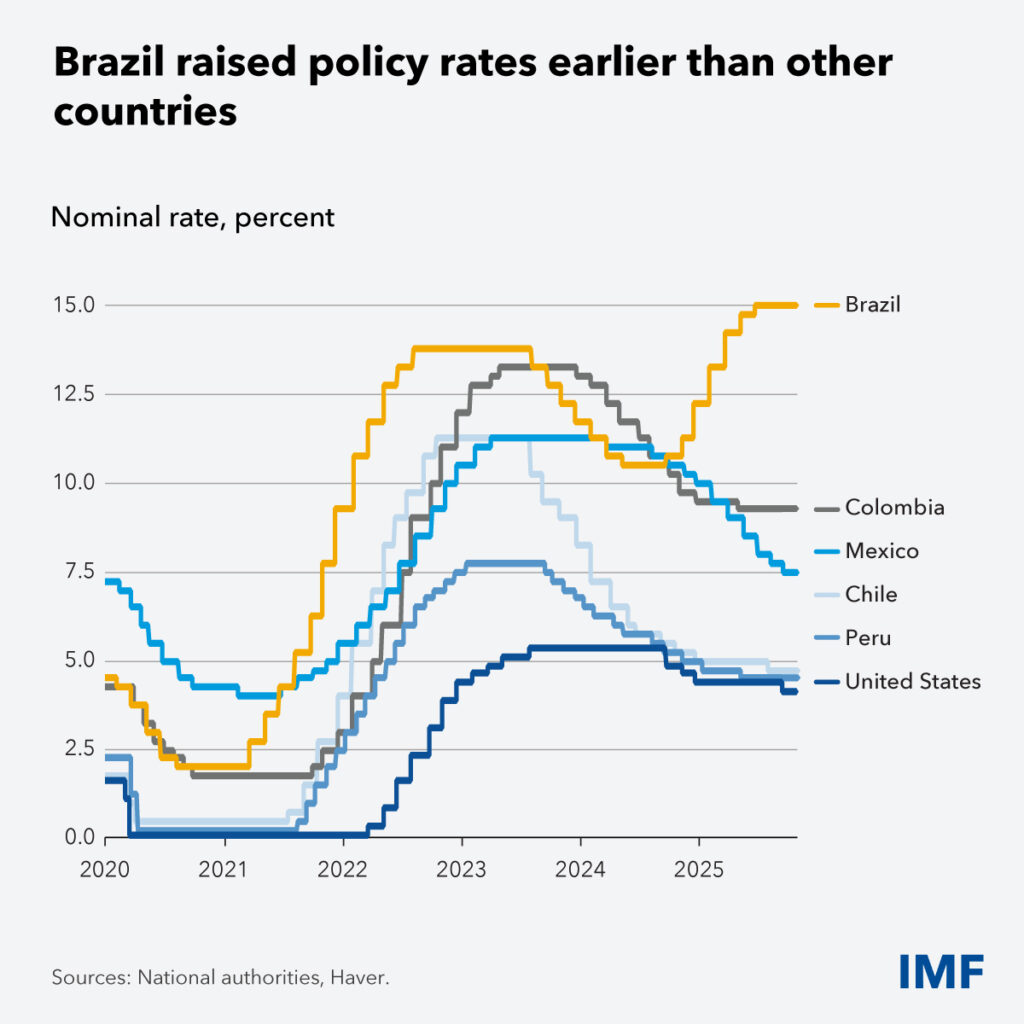
That is the implication of a recent International Monetary Fund (IMF) report looking at the reasons why Brazil’s monetary policy interest rate (Selic) is one of the highest among major economies.
At 15%, the Selic rate is well above the policy rates of other major Latin American countries, including Mexico, Columbia and Peru, which all currently sit below 10%.
And it has risen by around four percentage points in 2025 alone, while central bank interest rates in these comparison countries have fallen.
According to the IMF, bank credit still grew by 11.5% while corporate bond issuance rose by 30% in the last year.
This lending activity has been driven by Brazil’s new status as a fintech hub, aided by supportive regulation and an expanding economy, with the country accounting for 63% of all Latin American fintech deals in the third quarter of 2025.
In 2024, digital banks and other fintech lenders accounted for a quarter of the credit card market and over 10% of non-payroll personal loans.
“Increased competition reduced banking-sector concentration and lowered average lending rates of incumbent banks,” the IMF noted.
In other words, the Selic rate has had to rise so high because otherwise it would not have much of a dampening effect on lending.
Brazil’s fintech boom is not confined to the lending sector. Trading apps have benefitted as well.
This includes the retail prop firm segment, with recent data revealed by Tradeinformer finding users spend an average of $800 on challenges.