



Turn cTrader into your prop firm’s growth engine
A good reason to go to events is you end up bumping into people randomly. And one of the people I bumped into randomly last year was Cormac Munnelly.
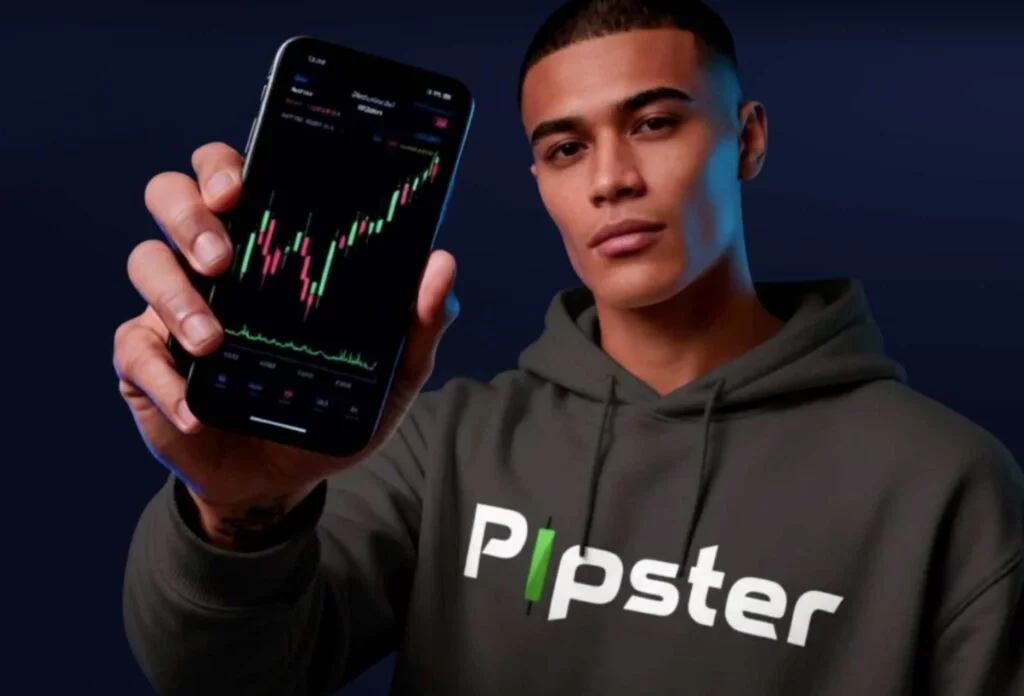
Unlike almost everyone else in the prop space, Cormac was a ‘real’ proprietary trader. He and his two co-founders, who have worked at firms like First Derivative and Morgan Stanley, have just launched Pipster – a new prop firm.
The company went live at the start of this month. I spoke to Cormac about his background and why he decided to launch a ‘modern’ prop firm.
DK: Most prop founders have more of a marketing background. Pipster is unusual as you come from the ‘real’ prop trading space and were trading your own capital for a long time. Can you talk about that?
CM: I grew up in the Irish countryside, so I didn’t come from a posh background or anything. I moved to London in the early 2000s and managed to get a job in the insurance market. I did about nine months cold calling banks to sell them products. It was a great experience but a horrible job, so I looked for something else and ended up interviewing for a trading firm.
That’s how I ended up being a proprietary trader. I still have the letter where I got hired, as a “Graduate Proprietary Trader”, in 2006. It was with a company where the owners used to trade on the LIFFE floor and had set up a futures trading business afterwards.
DK: And what was that like to start out?
CM: They put up £30k of capital and just said ‘don’t lose too much’. That was pretty much it. First day I lost £400. Day two I lost £300. Day three I lost £300. For a few months it was tough, you have ups and downs. But at a certain point it clicked. And so after a year I had tripled my allocation. And then you get a better split of profits. So initially that was 50/50 and then it moved up to 60/40, then 70/30, and so on.
DK: And at what point did you move on to trade your own capital?
It wasn’t that long. After a bit more than 12 months, I realised I had some strategies that worked so I figured, ‘why not just go it alone?’. And so I traded my own account for the next 13 years after that.
DK: Isn’t it insanely stressful?
Yes, 100% it is and it becomes tougher the more responsibility you have, so like when kids come along.
DK: And why did you stop?
My best years were from about 2011 – 2015, although I never had a loss-making year. What changed was that it was becoming harder and harder for me to run the strategy that gave me an edge. You have times where what you were doing stops working and you have to switch to something new.
A lot of what I did was on German debt and rates trading around market open. At a certain point the market open for futures switched to 1 am. At the same time, you had this change in how rates were being set after the LIBOR scandal.
Ultimately there were a few things like that where the market mechanics were changing and the logistics of trading my strategy became more and more cumbersome.
I wanted a change and decided to move into the technology world. On the back of that I ended up working at Morgan Stanley, building some of their OTC derivatives technology, which is where I met my Pipster Co-Founder Alan. I then worked at Charles River, which is State Street’s trading platform. So all of that gave me a lot of insight into the technology side of things and I learnt a lot more about the OTC markets as well.
DK: And how did you end up in prop?
After getting some of the experience in the tech space, I was looking around again and thinking ‘what can I do that’s a bit more interesting’?
Prop was there and I actually found the model really compelling. It mimics a lot of what I did when I was starting out at a prop firm. But it also seemed better than the traditional broker model. If you are someone just starting out and you pay ten times to take ten $500 challenges, I think you actually learn a lot more and get more insights into how to improve, than if you dump the whole $5,000 into one brokerage account and blow it in one go.
So I liked the model a lot but there is almost no one in the sector with genuine trading experience or with the same sort of tech knowledge that we have. That’s where we think we can bring something much better to the industry and actually help people, rather than just using marketing gimmicks to sell them a dream.
DK: Something I sometimes think is there is a difference between retail trading and ‘real’ trading. Retail trading is almost its own world. So if you look at prop, do you actually see a similarity between your ‘real’ prop trading career and the sector? And can prop firm traders find a meaningful edge?
CM: Definitely. If you look at the rules that prop firms offer, they can obviously be silly sometimes. But broadly they are set up to impose risk limits on you. That’s completely normal and is an area where I think we need to work with traders that come to Pipster.
In terms of an edge, there is always something you can do. When I started I was not systematic at all. I became really good at reading market flow. So if I could see someone wanted to execute at a certain size then I could trade off the back of that. Over time that edge wasn’t there in the same way and it became more about market news. Then I built an automation to trade LIBOR but the edge there went away over time as well.
There is always something and where Pipster can help people is by supporting them in managing their risk and improving their strategies. Sometimes you need a big brother tapping you on your shoulder and saying, ‘that’s enough.’ It’s something I actually missed sometimes trading my own account.
That is something I do think that’s missing in the space at the moment is the sense of trust you build with a risk team. When I was trading at a prop firm, I had a good relationship with the risk manager. They knew what I was doing and could trust me to take on big position sizes. I think that sort of dynamic is lacking in the space at the moment – it’s very mechanical, rather than personal.
DK: On the risk point, that is obviously one of the big problems in the prop firm sector at the moment. There is no real risk management solution. How do you deal with that?
CM: The risk system is no more complex than some of the engines I’ve seen before. All you’re doing is building a risk engine that is based on your order book’s aggregate positions, looking at pending orders and existing positions. Then you look at the exposure at a given price.
My two co-founders were quant traders previously. What we are building is a system that will operate in that way. We take the data that good traders create and trade our own book on the back of it. I think a lot of the mistakes so far is because you have people that didn’t just have no trading knowledge, they had no financial services experience at all. If your career to date has been two years working in e-commerce, how would you know what VaR is?
DK: That sort of goes back to my prior question, which is, do ‘real’ CFD traders exist in the same way they do in the futures market? Because if they don’t or it’s impossible to determine who is one, then it makes building that engine impossible.
CM: The simple answer is yes and I know because someone I started trading with as a graduate is one of them. We’re completely different. I come from the Irish countryside, he went to a private school here in the UK, but we’re still good friends.
He only trades FX and does it primarily through spread bet accounts. He’s done it for 16 years and is still making money consistently. That’s the kind of person we’re looking to find at Pipster.