

Scope Prime recently announced a strategic partnership with Centroid Solutions to launch a new White Label brokerage solution that combines Scope Prime’s institutional liquidity, execution expertise and market access with Centroid’s C2C Trading Platform. Together, the two firms are delivering a turnkey brokerage infrastructure offering designed to help brokers accelerate time-to-market, reduce operational complexity and focus on growth.
The partnership reflects a wider industry trend towards integrated ecosystems that bring together liquidity, technology and infrastructure within a single, connected environment.
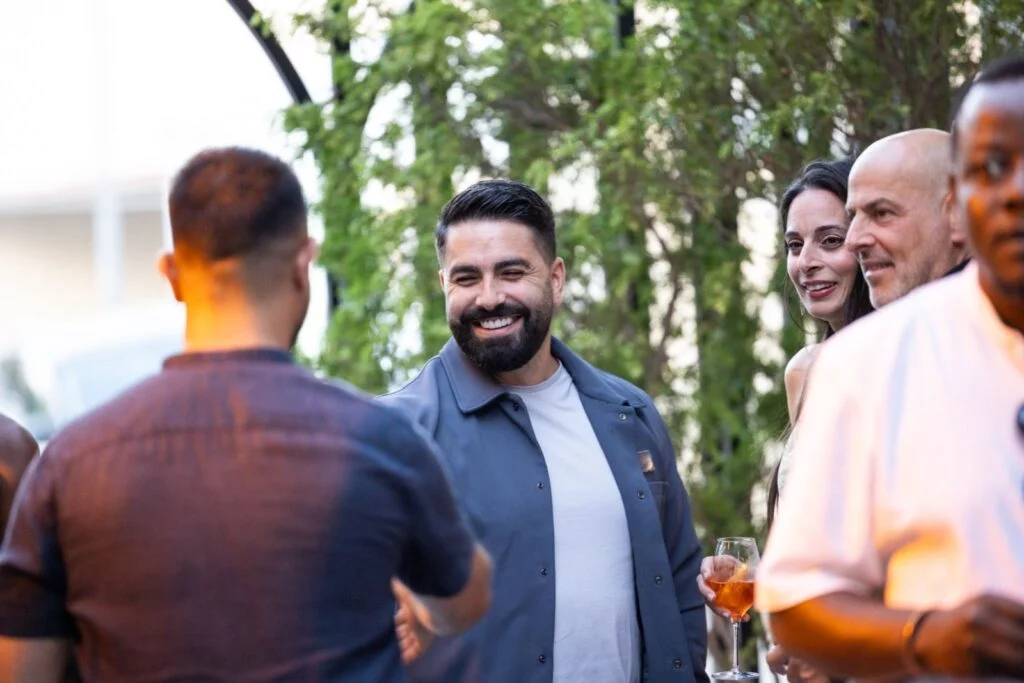
After attending the Scope Prime and Centroid Solutions event at The Art of Exposure in Limassol, I sat down with Michael Ayres, CEO of Rostro Group, the parent company of Scope Prime, to discuss the evolution of brokerage infrastructure, the future of prime services, and Rostro’s vision of creating a vertically integrated ecosystem that connects liquidity, technology and infrastructure within a single client-centric offering.
Can you talk about why the Centroid partnership is strategically important and how it fits into the overall Rostro vision?
The partnership with Centroid is a strong example of our broader vision in action.
At Rostro, our goal is to build a vertically integrated ecosystem that connects liquidity, technology and infrastructure in a way that creates tangible value for clients. We want to simplify complexity and provide solutions that support clients across the entire trading lifecycle.
Centroid brings market-leading brokerage technology and infrastructure capabilities, while Scope Prime contributes institutional liquidity, execution expertise and market access. Together, we’re able to deliver a more comprehensive solution that helps brokers launch, operate and scale more efficiently.
Importantly, this isn’t about adding another product. It’s about strengthening the ecosystem and providing a simple solution to a complex problem. There are many benefits around cost, product range and operational simplicity that brokers can gain from working within this partnership we have rolled out with Centroid.
The partnership seems to be catering towards changes we’re seeing in the brokerage space. What’s driving that change?
The industry has matured significantly over the last decade. Brokers today operate in a far more complex environment than they did even five years ago. Client expectations have risen, regulation has become more demanding, and technology has evolved at an incredible pace. At the same time, traders and institutions increasingly expect access to multiple asset trading, seamless digital experiences, and institutional-grade execution.
What we’re seeing is a shift away from standalone products towards holistic solutions. Success is no longer determined by spreads or access to liquidity. It’s about the ability to deliver an integrated experience that combines technology, execution, risk management, and operational efficiency.
So that would explain why we’re seeing a move towards integrated solutions.
Absolutely. To be completely honest, I think people (and brokers) don’t have the time for complexity anymore or the costs that come with it. We see our role as a prime broker to be the ones who do this, via our access and ecosystem internally.
Historically, brokers were often responsible for sourcing, integrating and managing multiple providers across liquidity, technology, risk management and client lifecycle infrastructure. While that approach worked, it frequently created operational complexity, increased costs and slowed growth. I remember managing this firsthand myself.
Today, firms are increasingly looking for partners that can bring these capabilities together within a single, integrated offering, allowing them to focus on client acquisition, product development, and business growth. That’s what the partnership between Scope Prime and Centroid is offering brokers.
Vertical integration, which is what we’re trying to do at large at Rostro, doesn’t necessarily mean owning every component. It means delivering a seamless experience where liquidity, technology and infrastructure work together as one ecosystem.
Liquidity distribution has become as competitive as the retail broker market. What does Rostro do to stand out, given that’s the case?
Liquidity remains absolutely fundamental, but I do believe the conversation has evolved.
Access to liquidity is no longer enough on its own. What increasingly matters is how that liquidity is delivered, managed, and integrated into a broader infrastructure ecosystem.
The real differentiators today are execution quality, technology, risk management, connectivity, and service. Clients are looking for partners who can help them solve business challenges, not simply provide a liquidity feed.
We have spent the first half of this year working to optimise this part of our offering further. We took a careful look at how the market had evolved and where there were gaps or areas to fill. Which we have now filled. We have expanded our range of bespoke liquidity making capabilities whilst also adding in a range of unique venues to offset our systematic hedging (ECNs, non-bank market makers).
What does the next generation of brokerage look like?
It’s almost become a cliche to say the next generation broker will be more technology-driven and more automated, but it is without a doubt where we’re heading. I’d also say multi-asset is truly no longer optional. Not multi-instrument, but multi-asset; an offering beyond CFDs.
Clients, whether institutional or retail, expect diversity and flexibility. They want access to a broad range of markets, intuitive digital experiences and reliable infrastructure. Retail clients in particular also seek (and expect) technology that mirrors the experiences they receive from digital banking and consumer technology.
Ultimately, the next generation of brokerage will be defined less by individual products and more by how effectively firms connect the various components of their business into a single, scalable operating model.
FX, Digital Assets, Futures & Options – are markets converging?
These are all markets we offer access to, and while each market retains its own characteristics, we’re certainly seeing convergence from an infrastructure perspective.
Clients increasingly want access to multiple asset classes through a single relationship, supported by consistent technology, execution, and reporting frameworks. The distinction between traditional and emerging asset classes is becoming less relevant from an operational standpoint.
Digital assets are a good example. Institutional participation continues to grow, and many of the same principles that govern traditional markets – liquidity, execution quality, risk management and transparency – are becoming increasingly important.
So from that perspective, infrastructure is converging, but not the markets themselves.
What opportunities do you see over the next five years and what would success look like to you for the Group and its brands.
The opportunity lies in helping clients navigate increasing complexity while continuing to expand access to global markets. I want us to be known as the group with the widest market access coverage. It’s complex – from how we clear business, to how we organise internal processes to create or build the client facing markets.
For Rostro, success isn’t simply about scale. It’s about becoming a trusted long-term partner to our clients. If, over the next five years, we continue to strengthen our ecosystem, deepen client relationships and create solutions that genuinely simplify growth for our partners, then I would consider that a successful outcome for the Group and all of our brands.