








 FCA
FCA CySEC
CySEC ASIC
ASIC FSC
FSC FSA
FSA FSA
FSA DFSA / ADGM
 SCB
SCBOverview
Eightcap was established by Joel Murphy in 2014. He served as CEO until 2022 before becoming the company’s Executive Director. The leadership team includes industry veterans like CEO Tim Brady and Group CIO Bryn Newell.
The broker serves clients around the globe and operates through several entities – each is regulated by a reputable authority: ASIC (Australia), FCA (UK), CySEC (Cyprus), SCB (Bahamas), MFSC (Mauritius) , and FSA (Seychelles). Eightcap keeps client funds separate in top banks and offers negative balance protection, so you won’t owe more than your deposit.
Eightcap offers 800+ financial instruments that cover everything from the standard currency pairs to more niche assets. It focuses on short- to medium-term traders interested in leveraged CFD trading on currencies, indices, commodities, shares, and crypto. You can trade with Eightcap using MetaTrader 4, MetaTrader 5, and TradingView.
Overall, we like how strongly the broker is overseen, its straightforward approach to CFD trading, competitive spreads and fees, and their support for high-quality third-party platforms.On the downside, we think the educational materials are very basic, and the broker will not be suitable for you if you’re looking for long-term investment products.
Pros & Cons
- Regulated by multiple tier-1 authorities, including FCA, CySec, and ASIC
- Supports MetaTrader 4, MetaTrader 5, and TradingView
- Wide range of crypto-assets
- Simple account types suitable for beginners and active traders
- No internal fees
- CFD trading only
- Limited educational content
- Minimum deposit requirements apply
Trust
The most essential question you, as a trader, may ask is: “Is my money safe with Eightcap?”.
In this area, the broker performs well.
On the Eightcap’s website, you will find all necessary details about its founders and management; you can freely access the company’s legal documents, including licenses, regulations, disclosures, and user agreements.
User feedback on third-party review platforms is mostly positive. The broker’s score on Trustpilot is currently 4.0/5 from 3,400 reviews, with many traders highlighting fast order execution, stable platforms, and competitive pricing.
Overall, we feel that Eightcap offers a high level of trust and safety for retail traders.
Regulation
Account Opening
Opening an account with Eightcap is easy and should not take more than a few minutes. As is required by all serious regulators, you will need to verify your identity and provide some other basic information before trading. Typically, this involves uploading a photo of government-issued ID and a proof of residence document.
We like that Eightcap keeps its account offering simple. It has two main live accounts that cover the needs of most retail traders: Standard and Raw, both starting at $100 minimum deposit.
Traders with active live trading accounts can create up to 6 demo accounts at once: three on the MT4 platform and three on MT5. They get deactivated 30 days after they are opened or once 5,000 virtual trades have been completed.
Eightcap is missing some specialized options. Most notably, it does not provide swap-free (Islamic) accounts, which can be a dealbreaker for traders following Sharia law. Furthermore, the broker does not offer managed accounts (MAM/PAMM), which means you cannot have a professional manage your funds, nor can seasoned traders handle multiple client accounts at the same time.
Standard Account
Standard Account Key Features
Raw Account
The Raw Account with Eightcap is designed for more active but cost-conscious traders, who want the lowest possible spreads. You get the actual market prices (the “raw” spread) without the broker adding their own markup.
In exchange for these thin spreads, you pay a commission when opening and closing trades. If you are a scalper, high-volume trader, or use automated robots (EAs), the Raw Account is likely to be a better fit for you.
Raw Account Key Features
Products
Eightcap has a lot of different tradable instruments that can help traders spread their investments across popular markets.
You can access more than 800 CFD products with the broker, which include forex, indices, commodities, cryptocurrencies, and shares. The biggest variety is in stock and crypto CFDs, but there are still lots of options for you in other asset classes.
All of these instruments are traded as CFDs, meaning you don’t actually own the assets themselves, but can make both long and short trades.
It’s also important to note that the specific assets you choose to trade will vary based on your location, selected trading platform, and which Eightcap entity oversees your account. Find the most popular assets available at Eightcap in the table below.
| Asset Class | Examples |
|---|---|
| Forex | 40+ pairs (majors, minors, exotics) – AUDCAD, AUDCHF, EURUSD, GBPJPY, CHNJPY, USDMXN, NZDUSD, etc. |
| Energies and Commodities | Gold, Silver, Platinum, Zinc, Oil (WTI/Brent), etc. |
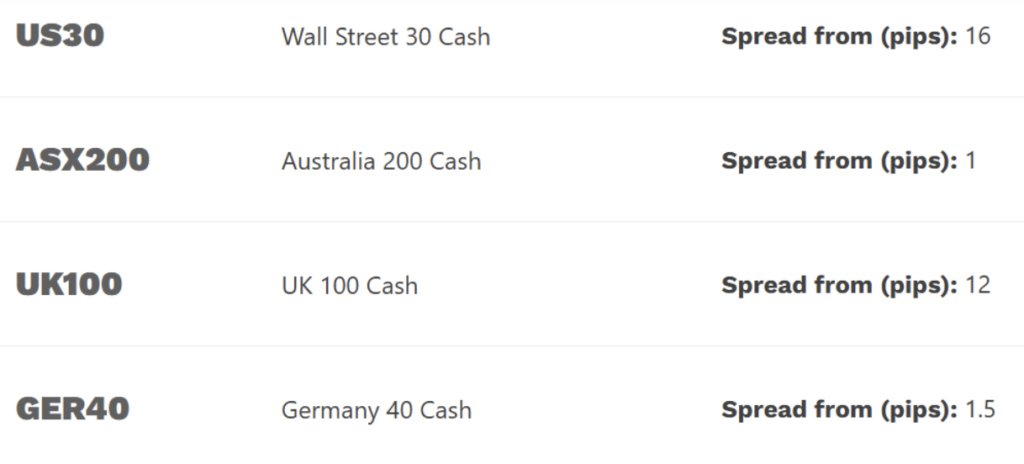
| Indices | Nikkei, S&P 500, DAX 30, UK100, Dow Jones 30, Hang Seng, etc. |
| Share CFDs | 600+ Stocks (US, AU, UK, EU) – National Aust. Bank, Apple, Pepsico, Tesla, META, Alphabet Inc, Amazon, etc. |
| ETFs | 9 – iShares MSCI China ETF, iShares MSCI Emerging Markets ETF, SPDR S&P 500 ETF Trust, iShares Global 100 ETF, Vanguard US Total Markets Shares INDEX ETF, etc. |
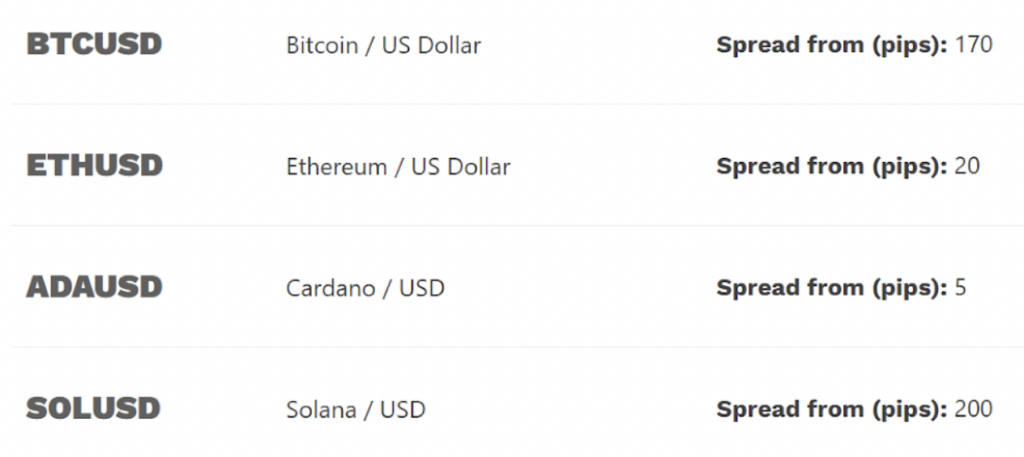
| Cryptocurrency | 80+ cryptopairs – Bitcoin, Ethereum, Solana, Uniswap, Wave, Chromia, StormX, Polkadot, Monero, Dash, etc. |
Deposits and withdrawals
A broker can have the best spreads in the world, but it doesn’t matter if you cannot deposit and withdraw money easily. Eightcap stands out here, too.
To start trading with Eightcap, you will need to activate your live account with a minimum deposit of $100 first, no matter which account you choose – Raw or Standard.
Since the broker operates in many regions, traders can easily choose a base currency they prefer and avoid conversion fees:
- Major Markets: AUD, USD, EUR, GBP
- Regional Options: NZD, CAD, SGD
Eightcap’s big advantage is that it doesn’t charge internal deposit fees. However, it’s worth noting that your bank or payment provider may apply their own third-party transaction costs.
How long do deposits take?
You will find plenty of funding methods with Eightcap, which may vary based on jurisdiction and location.
Processing is instant in most cases, especially if you deposit using credit or debit cards, digital wallets such as PayPal, Neteller, Skrill, and WorldPlay. When you transfer money to your account via bank wire, you may wait for 3-5 business days for the payment to go through.
| Deposit Method | Transaction Limit | Processing Time |
|---|---|---|
| Bank Wire Transfer | N/A | 1-5 business days |
| Visa/Mastercard | $20,000 | Instant |
| PayPal | $4,000 | Instant |
| Skrill | $50,000 | Instant |
| FasaPay | $10,000 | Instant |
| Neteller | $50,000 | Instant |
| DragonPay | $3,000 | Instant |
| Cryptocurrencies | $50,000-$100,000 | Instant |
| UnionPay | $3,000 | Instant |
| BPay | $50,000 | 1-2 business days |
How long do withdrawals take?
The withdrawal process at Eightcap is fast and smooth, too, but there are a few “house rules” you should keep in mind.
Withdrawals typically undergo a 1-2 business day security review. The broker adheres to a “return to source” policy, which means your funds must go back to the same card or account you used for making a deposit.
If you use crypto as your funding method, make sure your wallet address matches your deposit record to avoid extra identity verification. All the accounts you transfer to or from must be in your name.
| Withdrawal Method | Transaction Limit | Processing Time |
|---|---|---|
| Bank Wire Transfer | Above $25 / $20 | 1-5 business days |
| Visa/Mastercard | None | 2-5 business days |
| PayPal | None | 1-5 business days |
| Skrill | $50-$50,000 | 1 business day |
| FasaPay | N/A | 1 business day |
| Neteller | $50-$50,000 | 1 business day |
| DragonPay | N/A | 1 business day |
| Cryptocurrencies | $50-$100,000 | Instant |
| UnionPay | N/A | 1 business day |
| BPay | Above $25 / $20 | 1-3 business days |
Fees
Understanding trading costs is essential when choosing an online broker, especially if you want predictable expenses.
From our point of view, Eightcap maintains a highly transparent and clear fee structure.
You will not be charged deposit, withdrawal, or inactivity fees by the broker. However, depending on your location, the deposit/withdrawal method, and the base currency you choose, third-party providers may apply their own fees.
Account-Based Costs: Standard vs. Raw
Standard
Your main trading costs are determined by your choice of account. When trading on a Standard Account, you do not pay commissions, since all costs are already integrated into the spread. The only exception to this is stock CFDs, where traders must pay a commission when opening a trade.
For major pairs like the EUR/USD, spreads in an Eightcap Standard Account typically start at around 1.0 pip, though actual spreads can vary in live markets. This is a perfect option for casual traders who prefer upfront pricing.
Raw
Spreads
Forex CFDs
| Asset | Raw Account Spread (Typical) | Standard Account Spread (Typical) | Commission (Raw Only) |
|---|---|---|---|
| EUR/USD | 0.0 – 0.2 pips | 1.0 – 1.2 pips | $7.00 round turn |
| GBP/USD | 0.2 – 0.4 pips | 1.2 – 1.5 pips | $7.00 round turn |
| USD/JPY | 0.1 – 0.3 pips | 1.1 – 1.4 pips | $7.00 round turn |
| AUD/USD | 0.1 – 0.3 pips | 1.1 – 1.3 pips | $7.00 round turn |
Share CFD
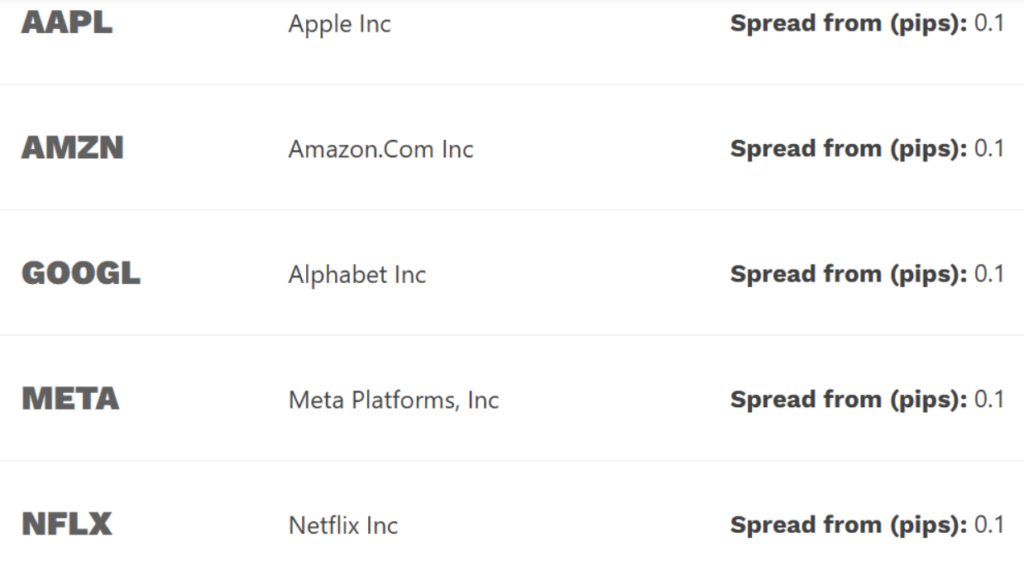
Trading shares at Eightcap is slightly different from trading FX. Here, you have to pay a commission on both account types, because the broker has to mirror the real stock exchange costs.
At Eightcap, you will find as many as 600 shares from the UK, US, Europe, and Australia. The flat-fee structure for US stocks is the simplest to understand and should help you easily calculate your costs before you enter a trade.
- US Shares: You pay a flat $2.00 per side ($4.00 total). This is great for larger trades, as the fee doesn’t increase with the size of the position.
- Australian Shares: These carry a 0.1% commission of the total trade value, with a minimum charge of $7.00 AUD.
- UK & EU Shares: Similar to the Australian market, these usually cost 0.1% of the trade value.
Cryptocurrencies
Commodities & Indices
Non-Trading Fees: Inactivity and Deposit
Overnight (Swap) Fees
If you keep positions open overnight, swap fees usually apply. These represent the cost of holding leveraged positions after the trading day ends and reflect interest rate differentials between currencies or assets. Swap rates vary by instrument, direction (whether you go long or short), and market conditions, and can change daily.
For most markets, swap charges are standard industry rates. Eightcap uses a “triple swap” on Wednesdays (for Forex) or Fridays (for some indices) to account for the weekend settlement period.
Platforms
MetaTrader 4
MetaTrader 5
TradingView
Eightcap stands out for its TradingView features offering, even winning awards for this specific integration. TradingView is a “charting-first” platform with a massive social network where you can share ideas with other traders and get valuable insights. You get over 100,000 community-built indicators and 15+ unique chart types like Renko, Kagi, and Point & Figure.
TradingView provides 9 timeframes, over 1,000 tradables, and more than 100 indicators. You can also benefit from a strategy tester available only on TradingView.
The platform works in any browser and through mobile apps (Android, iOS). We think TradingView is a strong advantage, especially if you value visual analysis and market insights from other traders.
Final Thoughts
FAQ


Latest News
LMAX will let clients put down crypto margin, which can be used to trade spot FX, CFDs, crypto, and perpetuals.
