
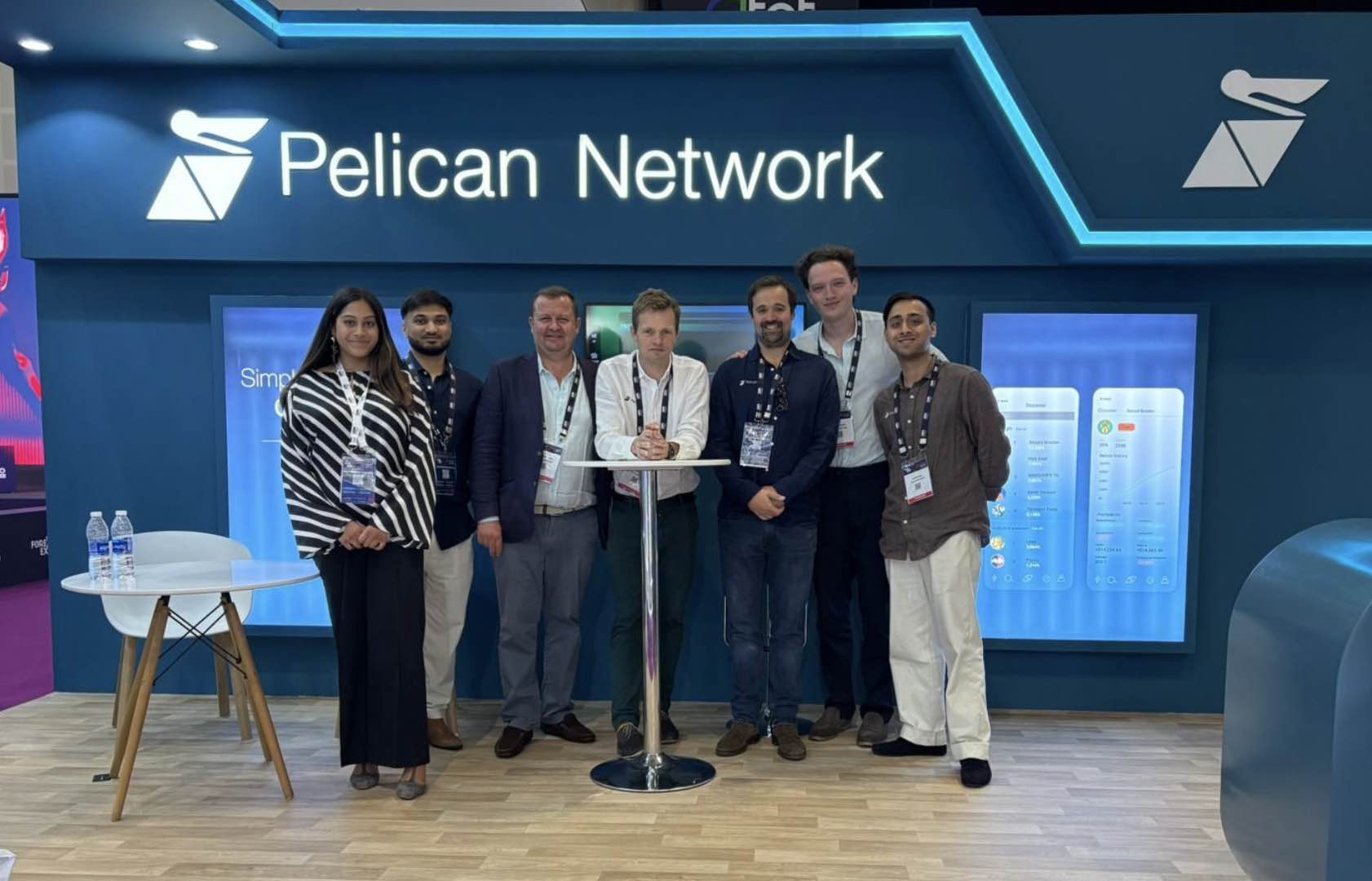
Copy trading has moved from a niche retail feature to a core part of broker infrastructure. Across global markets, demand continues to grow – driven by mobile-first traders, the rise of IB-led acquisition models, and increasing participation from newer retail audiences.
On paper, most copy trading solutions now look similar. In practice, the outcomes vary dramatically.
Brokers expect copy trading to increase volume, improve retention, unlock new revenue streams and attract demographics. Too often, it does none of the above. The gap between expectation and reality is not driven by market demand – it is driven by the limitations of the underlying technology, and the way the software is supported
The issue is simple: much of the industry is still solving yesterday’s problems.
The Gap Between Perception and Reality
Many providers position their offering around integrations, flexibility and ease of deployment. “Cross-platform” capabilities are widely advertised. APIs promise rapid rollout across new environments. Server-to-server copying is presented as innovation.
In reality, these are baseline requirements – not differentiators.
In many cases, “cross-platform” still means operating within the same infrastructure. Copying between two MT4 servers, or within a single platform environment, is framed as interoperability. It is not.
These limitations become clear in real trading environments. Copying between MT4 and MT5 can introduce inconsistencies in execution and symbol mapping. Cross-server setups often suffer from latency and reliability issues. Differences between account types, such as standard and micro accounts, can distort position sizing if not handled correctly. And when it comes to copying across entirely different trading infrastructures, many systems simply do not support it in a meaningful way.
These challenges are often hidden behind the term “integration”, but integration alone does not guarantee consistent or reliable trade replication.
This distinction matters. Because while integration makes copy trading easier to launch, it does not make it effective at scale.
What Real Copy Trading Infrastructure Looks Like
True cross-platform copy trading means something very different. It means a strategy operating on one trading infrastructure can be executed seamlessly on another – without compromise in execution, risk controls or scalability.
This is where the industry begins to diverge.
Pelican specialises in true cross-platform copy trading, allowing strategies to operate seamlessly across both different brokers and different trading infrastructures – a capability many providers claim, but few deliver reliably at scale.
Crucially, this is not a recent development. It is infrastructure that has been live, tested and deployed across 70 brokers for years.
The difference is not in what is promised. It is in what is delivered.
The Real Problems Brokers Face
The reason many copy trading implementations underperform is not a lack of demand. It is structural.
Empty ecosystems
Most solutions launch without meaningful strategy depth. It is the equivalent of opening a shop with empty shelves – no matter how well designed the storefront is, customers will not stay if there is nothing to engage with.
Brokers are left to source, onboard and retain signal providers themselves, and if top traders leave, the product can lose value overnight. Not only is this hard, it’s also expensive. CPA and rebate deals needed to attract new signals eat into a broker’s margins.
Fragmented environments
Without a shared network, each broker operates in isolation. There is no compounding effect, no shared liquidity of strategies, and no long-term stability in content.
Weak monetisation models
Without a built-in ecosystem of incentives, strategy providers and IBs have little reason to stay or scale. Performance fees are inconsistent or operationally complex, limiting revenue potential.
A SaaS mindset
Many providers operate as software vendors. Support is reactive, delivered through ticketing systems, with little involvement beyond initial deployment. The success of the product post-launch is largely left to the broker. In some instances you even have to pay for support services.
Many providers are built to help brokers launch copy trading. Few are built to help them succeed with it.
From Tools to Networks
The core shift in copy trading is now clear.
This is no longer about adding a feature. It is about building an ecosystem.
Integrations provide access. Networks create value.
A standalone copy trading system, no matter how well built, will always struggle to generate consistent activity without a critical mass of strategies, traders and incentives. A network, by contrast, becomes stronger as it grows.
This is the model Pelican has built.
A Network Designed for Outcomes
The Pelican Network connects over 70 brokers into a shared ecosystem of more than 9,000 live strategies. Instead of operating in isolation, each broker benefits from a continuously replenishing pool of trading content.
This network effect solves the single biggest failure point in copy trading: sustainability.
At the same time, Pelican’s infrastructure is designed not just for deployment, but for performance.
True cross-platform capability ensures strategies are not limited by underlying trading infrastructure. A strategy running in one environment can be copied seamlessly into another, expanding access and removing fragmentation.
Commercially, the ecosystem is reinforced through a proven monetisation model. On average, more than $1 million is paid out each month to strategy providers and IBs through automated performance fees. This creates a self-sustaining incentive structure that attracts and retains high-quality participants.
Beyond the technology, Pelican operates as a partner rather than a vendor. Brokers work directly with dedicated teams, with ongoing strategic support focused on optimisation, growth and long-term performance – not just implementation.
Pelican Network is not a copy trading tool. It is infrastructure designed to drive broker growth.
Regulation: Grey Area or Structural Choice?
Copy trading is often described as a regulatory grey area. In practice, this is misleading.
It is only “grey” when the appropriate permissions are not in place.
When properly structured under recognised regulatory frameworks, copy trading becomes clear, defined and fully compliant. The ambiguity often associated with the model reflects gaps in regulatory coverage, not flaws in the concept itself.
Pelican has taken a different approach. With regulatory permissions across the FCA, CySEC and FSC Mauritius – and further expansion underway in the UAE and United States – the platform is built on a foundation of regulatory clarity.
This is not a constraint. It is a competitive advantage.
Outcomes, Not Features
As the market matures, brokers are becoming more discerning.
The conversation is shifting away from feature sets and towards outcomes.
Does the platform increase trading volume?
Does it improve client retention?
Does it create sustainable revenue streams?
These are the questions that matter.
Pelican partners consistently report increased trading activity, stronger engagement and improved client lifetime value driven by copy trading adoption. Not because of a single feature, but because of the structure of the ecosystem behind it.
The Next Phase of Copy Trading
Copy trading is no longer optional. It is expected.But not all implementations are equal.
The next phase of competition in this space will not be defined by who offers copy trading, but by who delivers it in a way that is scalable, sustainable and commercially effective.
The question for brokers is no longer whether to offer copy trading; it is whether the model they choose is built to succeed.