New research from Bybit has found that Ukraine and the US are leading the way in the use of stablecoins for transactions, followed by some names you may not expect.
In part this represents a broader bifurcation, where cryptocurrency use is on the rise in both highly developed countries and those with weak states, according to the exchange’s annual World Crypto Rankings.
The report found that there was no correlation between stablecoin use and GDP per capita, but there were two distinct attitudes towards adoption.
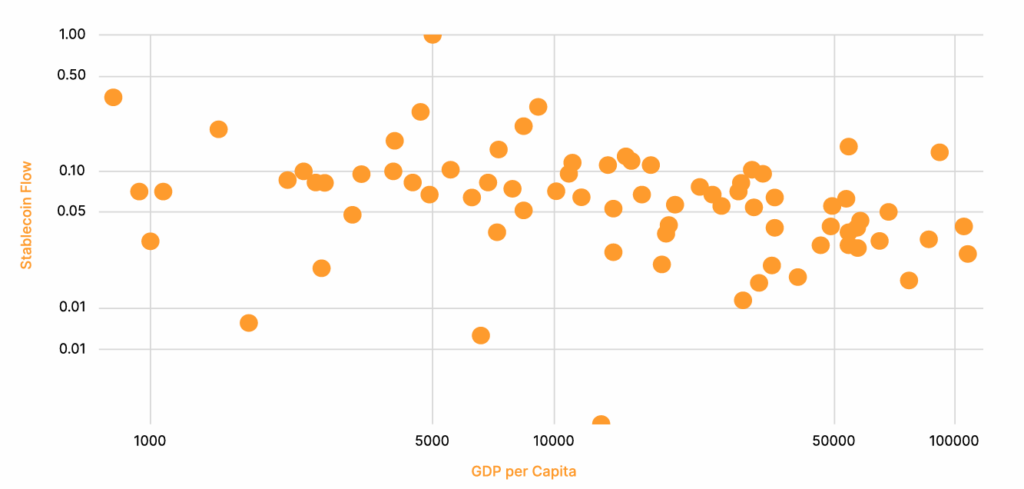
One is utility-driven, with users – often in developing countries – focused on everyday life and payments. The other is as a more efficient bridge to access to financial products or cryptocurrencies.
Ukraine was ranked highest in terms of overall transactional use by the report’s proprietary index, with this attributed to the use of stablecoins in facilitating commerce in extreme conditions from conflict to economic crises.
Such transactions now account for 3.60% of overall currency flow against the country’s GDP. This is hard evidence that stablecoins, the value of which are often pegged to the US dollar, can allow individuals to go about their life in the absence of a well functioning financial system.
Ukrainians have turned to Tether (USDT) for day-to-day purchases, cross-border transfers, or as a store of value, while retailers in the country have begun accepting stablecoins. Mobile apps like WhiteBIT or Kuna have become widely used.
Nigeria, which is ranked third in terms of stablecoin transactions and second in terms of stablecoin as a proportion of its GDP (1.20%), also faces problems with its financial system. The challenges include devaluation of the naira, capital controls, high remittance flows, and mistrust of local banks.
Among developed markets, Hong Kong also ranks highly, due to China’s restrictive financial controls. In terms of stablecoin flow as a proportion of GDP, it comes 8th place on the index at 0.52%.
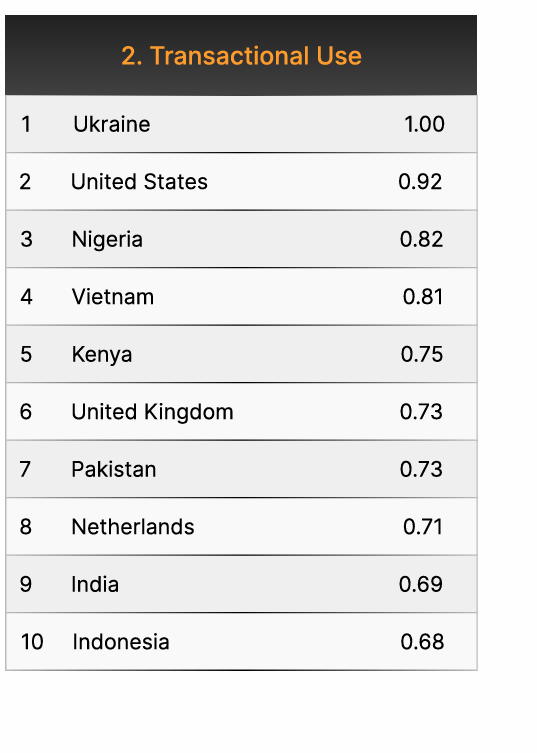
The US, by contrast, secured second place in overall stablecoin transactions largely due to institutional support, but has among the lowest flows to GDP on the index, placing 61st on that list at 0.11%.
Broader crypto adoption
Aside from stablecoin adoption, the report noted Singapore is leading the way in overall crypto adoption, followed by a few other countries you may not expect.
It found that Singapore led across four key pillars: User Penetration, Transactional Use, Institutional Readiness and Cultural Penetration.
The report attributed this to the Monetary Authority of Singapore becoming a “global reference point for crypto regulation”, with the regulator providing clear licensing rules and support for innovation.
“Global exchanges and fintechs base regional operations here, supported by a tech-forward population and institutional buy-in,” it noted.
“Singapore’s leadership reflects not just retail enthusiasm but its role as Asia’s crypto hub, where users, institutions, and regulators reinforce one another.”
The US ranked second on these criteria, and is followed by other developed financial hubs including Lithuania, Switzerland, and the United Arab Emirates. Lithuania punches above its weight as a financial hub due to a crypto-friendly policy stance.
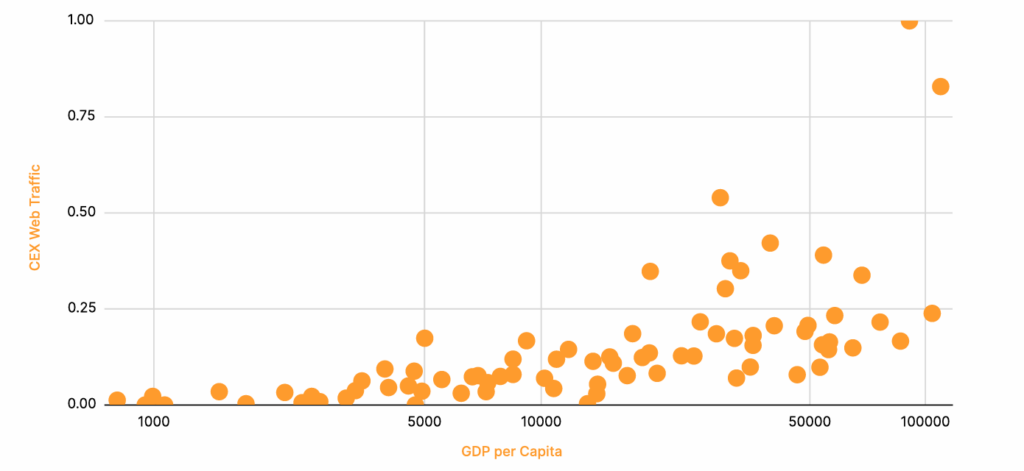
The report also highlighted that web traffic to centralised exchanges (CEXs) and DeFi protocols is strongly concentrated in high-GDP countries, suggesting that trading activity, investment and speculation dominate – as opposed to practical uses.