Over the past 12 months Scope Prime has been quietly building out a crypto product for its institutional partners.
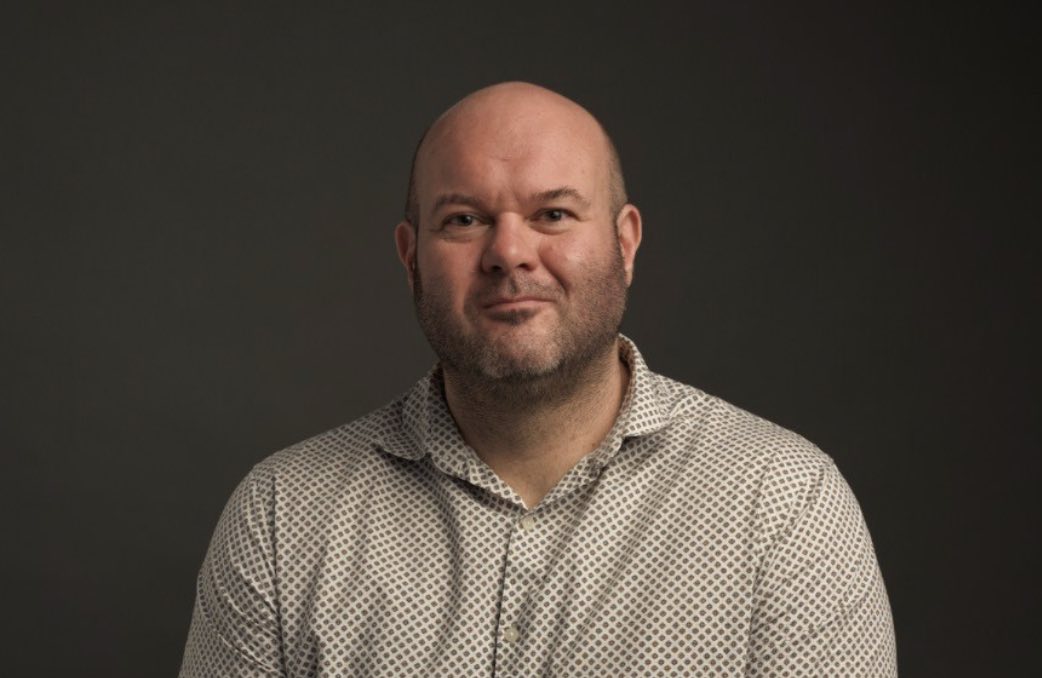
Mark Foulger, the group’s Managing Director for Digital Asset Innovation, has played a key role in the development of the new offering.
Based in Cyprus, Mark will be a familiar face to many as he has worked in the trading industry for more than two decades, with stints at firms like Integral and CMC Markets.
Recently he did an interview with Scope Prime’s Chief Commercial Officer – Lochlan White – so we figured we’d follow that up with some questions of our own.
In your recent interview with Scope Prime CCO Lochlan White, you spoke about fragmentation in crypto. What does that mean and what is Scope Prime doing to overcome the problems it causes?
Basically, it means that liquidity is highly split between different venues, like Coinbase being a primary exchange in North America, and Binance being the primary for much of Asia.
What we are doing is looking to provide our clients with a full breadth of liquidity from all the primary sources. This allows them access to all major liquidity sources without having to open accounts at 15 venues, increasing capital efficiency.
You come from an FX background. It looks like a lot of firms are now trying to replicate structures that exist in FX markets, like ECNs, for crypto. Do you think that will work, and are there any significant differences between the two asset classes that make it hard to achieve?
Yes, I think over time that the “institutionalising” of Crypto will occur and many of the same trading structures will emerge. The current limitation is mostly in the way of credit. Prime Brokerage in Crypto is in its infancy. We see our set-up as the natural extension of that as we are providing that institutional service to the marketplace.
Why is unified liquidity so important for institutional clients?
This plays a bit back to the credit intermediation referenced above. As liquidity is highly fragmented, it becomes a massive issue of having inventory on the correct venue required at time of trade. Having that unified liquidity stack for our clients allows us to ensure this is always the case.
Many firms aggregate liquidity in the CFD space, not just in crypto, but in general. What does Scope Prime do differently here?
We are deriving and generating our pricing at source, going directly to the largest market makers and exchanges to do so. We aren’t taking someone else’s feeds and simply redistributing them.
We are also creating differing liquidity pools based on client needs. Toxic flow – we can cater for that. High Frequency Trading – Not a problem. Need depth at 5 BTC in size? We can create pools designed for your needs. We have access to all the major players, and this allows us to create fully bespoke feeds.
How does your platform simplify the complexity of accessing multiple exchanges and OTC desks?
Credit facilitation can be difficult. Having to have capital or inventory at multiple exchanges, market makers, and so on, can be very capital intensive and frankly a logistical pain. As we also do volume, our pricing will often be better than what you could get by going direct as we get preferential rates from many of the venues that we utilize.
How does your dynamic margining engine help clients deploy capital more efficiently?
Scope Prime clients have access to more than just digital assets. Opening a single account allows them to deploy capital to trade thousands of instruments around the world. Our margining engine takes into account the risk across all of these markets so that more extensive strategies can be developed and deployed across multiple asset classes.
Failover reliability and uptime are key selling points. How do you achieve near zero downtime?
We have different streams and multiple tech stacks that allow for redundancies. One had issues actually over the last weekend, though the clients were totally unaware as our failovers went into place. During the October 11th crash, we had zero downtime, unlike many entities in the space.
You often highlight “depth beyond the top of book.” Why does this matter for institutional traders?
Many simply look at the headline price, whilst often the liquidity dries up past that point. For example, you might get 1 bp wide at top of book but if you trade even as little as 1 BTC, they might go to two and then to four times that. For those doing large size, it’s imperative they can get filled across a larger spectrum of size.
How do you ensure stable pricing and minimal slippage, especially during volatile periods?
By combining multiple sources of liquidity. For example, automated market makers are a great tool, as they will have a constant price around mid-market level. We add that to central limit order books and traditional market makers, which will give us a much more consistent price during periods of high volume. This approach means we are not reliant on one single type of liquidity. So, if market makers pull pricing, we still have a reliable stream with which to execute on, maintaining stability, reduced slippage and overall consistent performance regardless of market conditions.
What digital assets can clients currently trade through Scope Prime?
There are currently 80+ digital assets that are tradeable, including major cryptocurrencies like BTC, ETH, XRP and DOGE, but if a client has a specific request, we have access to thousands more.
How do you decide which tokens or products to add, and what’s in the pipeline for 2026?
We look really closely at liquidity. We also want to ensure that our clients don’t get “rugged”, which is that happens when providers pull liquidity, causing price spirals. We look at how the tokens are distributed across venues and team holdings. What we don’t want is a situation where insiders have the ability to crash the price.
Can you talk about your coverage across CEXs and DEXs and why bridging both matters?
DEXs are a great tool. In fact, there’s often more liquidity on-chain than off, and what makes that particularly valuable is the transparency of it all. Pricing is visible and predictable and this helps stabilise execution in volatile markets. So, by combining this on-chain depth with the order book functionality of CEXs and the efficiency of traditional market makers, we’re able to deliver a far more effective liquidity environment.
Who is this solution designed for? Hedge funds, brokers, proprietary desks?
It really is for everyone. The way that it’s designed is fully bespoke for our clients, so we can cater for what generally would be considered toxic flow to retail brokers, to algo hedge funds. We have created a product that takes in best-of-breed liquidity and can be tailored to client requirements.
How does your solution handle major market events?
This question is a timely one! On October 11th, we saw the largest one-day liquidation event in Crypto history. Many of the major exchanges had issues; some went down, large market makers pulled away from pricing. And whilst our pricing of course went wider, we had zero downtime, which allowed our clients to efficiently exit positions.