
Reach over 11m traders with cTrader
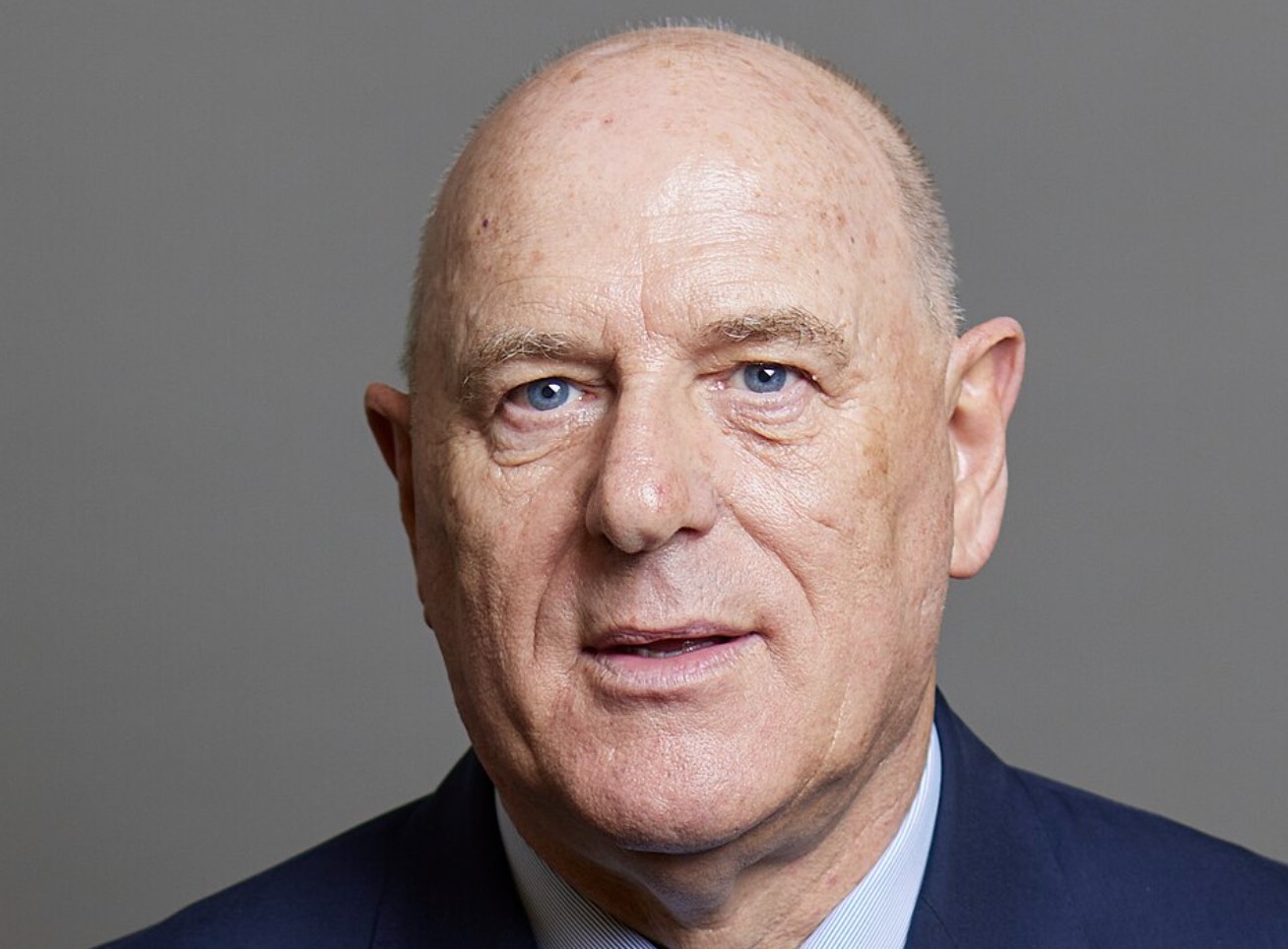
I don’t think I’ve ever met a lord before. I’ve definitely never had a lord make me a Nespresso before.
But that’s what happened last week at CMC Markets HQ in London prior to interviewing the company’s founder and CEO Peter Cruddas.
Feeling wired, we ran through the company’s latest results, future plans, and – the biggest mystery of all – why he keeps working when he doesn’t have to.

Put your broker in prime position with ATFX Connect
CMC Markets just launched Spectre, which is a non-leveraged spread bet. Has the uptake of that been good so far?
What I’d say first is that it can be easy to focus too much on spread bets and CFDs. CMC is a big business. We’re the second-largest stockbroker in Australia, for example. Spectre really derived from some of the requests and needs of our clients.
When you have different products, there are different levers you can pull on. I won’t give too much away in terms of how we structured Spectre, but the benefits are obvious. No leverage costs, no margin calls, no financing, no stamp duty, no capital gains tax. What’s not to love? It’s a great product. We’re quite excited about it and our clients are too.

Trade crypto CFDs with deep liquidity and no downtime
Everyone is banging on about ‘Revolut’ and fintech and all that. But let’s be real. We all want to know about what CMC Markets is going to do with Currys.
I can’t say too much about that one but what it’s related to is cash management. We’ve got a sophisticated treasury management system here and we can help other companies manage theirs. Then you add in our technology and APIs and it’s easy to make these sorts of partnerships.
It was a bit leftfield for some of our shareholders. You know, we had a lot of meetings over the last week and they were asking ‘what’s going on here? Why are you working with Currys?’
What I think it shows is how diverse this business has become and the power of our technology. We as a company are now attracting these sorts of technology deals and, if you look around, you can’t say that about any of our competition.

All the best brokers use Pelican for copy trading – so why don’t you?
On the deals front, if you look at your recent results, there was obviously this big uplift in API-based accounts. So essentially business coming from partners. But that doesn’t seem to have fed through into revenues. What’s going on there?
I think there are a couple of points. Firstly, naturally with B2B revenue you aren’t seeing the same level of revenue as a direct client because you share the income. The upside is that costs are lower. If a partner is trading through us, we do not have to acquire the client, do KYC, and onboarding and so on.
The more important part is that there has been a time lag with some of the new partnerships. So if you look at Revolut, they had a slow and staggered release that took some time to launch after we announced the deal and which is still on going.
But you are starting to see it come through. Like the report said, 70% of new accounts are coming from places where we have no presence. We’ve got somebody working on our behalf that has a presence in a country that’s bringing us business. What’s not to like?

Use Centroid to manage your broker’s risk
Something else in the accounts was the €300 million Commercial Paper Programme. Is that for acquisitions or something else?
The commercial paper offering is an extension of our treasury management division. It’s a division that I’m very passionate about because it’s a little bit related to my background. And so what we do is, we’ve got repo accounts, for example, and we can raise cash in the underlying market for whatever reason. We’re testing the market by issuing commercial paper to see how far we can go with it and it will just underpin our status. We’ve got a Fitch rating as well now.
So it’s just an expansion of what we do as a company. Nothing in it. We’re not making an acquisition, not talking to anybody. It’s just part of our treasury management functionality. But we do think it will pre-empt stablecoin clearing in the future, where we’ll need maybe some liquidity around that. But we don’t need liquidity for the company and we don’t need to invest in technology because we’re already doing it and it won’t cost us much.

Start hedging with Hantec Prime
You also announced this ‘super app’ in your results. Do you worry you’ll lose focus on your OTC business if you do that?
No. We’ve got a very big physical shares business in Australia. We’ve got our investment platforms in Singapore and the UK. We’ve got different teams working on them. So it’s not a distraction, it’s exciting. We love it.
Because if you stop and think about it, at the end of the day, if you trade Tesla shares, it doesn’t matter how you trade Tesla. If you trade it as a spread bet, as a CFD, as a physical, as an ETF, as an option. They’ve all got one thing in common: the price of Tesla is the price of Tesla. Everything else is a clearing system.
But revenue-wise, if someone is trading the CFD version of that, it is better for CMC?
I think those days here are coming to an end. Not in the wider industry, but at CMC Markets. Somebody said to me the other day, “Do you still rely on market volatility to improve your profits?” I said, if you’re opening a million accounts a year, forget about market volatility. You’ve got enough business coming through that if it’s small, medium or large, it’s still going to make good money.
So no, we don’t really think about the business that way now. What you’re seeing is the transformation of our company into something different. We’ve shifted our business in the past and we’re doing it again.
On crypto, my reading is that a lot of people in financial services don’t really believe in it. Like there was this Larry Fink interview where he basically implies it’s just about regulatory arbitrage and attracting a different audience of investors for him, so just branding. So do you see it as just adding a product because there’s demand or do you actually believe in crypto?
I am a big believer in stablecoins. I’m not a big believer in Bitcoin and Ethereum. For a couple of reasons. Number one, I think that Bitcoin and Ethereum are pure speculative products. They’re not attached to anything, and I cannot ever see a government or a commercial enterprise adopting Bitcoin as a currency or a way to pay for goods.
Just imagine if Elon Musk said, “I’m going to sell a Tesla Y series for one Bitcoin.” But what’s the value of the Y series? Because Bitcoin could be $60,000 or it could be $100,000. If he accepts Bitcoin, he’s speculating on Bitcoin. He’s not commercially selling goods. So no government, I believe, could accept Bitcoin and Ethereum as its currency because they can’t control the money supply, they can’t control the interest rate.
Why am I a big supporter of stablecoins? So stablecoins, as we know, will be attached to the dollar, to currencies, to gold, whatever.
The reason I’m very supportive of stablecoins is because they will help develop tokenisation of financial products. There will be a day in the future, not that far away, where you and me will have multi-asset wallets and we’ll go on our phone and we’ll buy a financial product, say a Tesla share – I know we’ve used that example a lot today – and we will instantly settle with each other.
So I might buy Tesla. Immediately I buy Tesla, I get the Tesla shares in my multi-asset wallet, and then I give you the cash or whoever sold me the Tesla shares in a millisecond, using tokenisation and stablecoins to settle at the correct value. So if Tesla’s valued in US dollars, the stablecoin value pegged to US dollars will mean that you and I can settle in our wallets instantly. We won’t have to go through the SWIFT system to pay you dollars and wait for T+2. So stablecoins I’m a big supporter of and tokenisation I’m a big supporter of.
Ok so moving to a slightly different topic, do you regret going public at all? I always think with the OTC industry, the market doesn’t understand it. So it’s a great business to own but not to have publicly traded.
Not at all. We’re talking to top banks globally. We’re working with companies like Westpac and Revolut. Being listed on the London Stock Exchange helps you get through that door. You can’t talk to these people if you haven’t got a public presence. We are winning business because we’re public.
The valuation does annoy me. If you look at a stockbroking start up in APAC, they recently raised at a huge valuation and they are not even profitable. Our Australian stockbroking business alone is bigger than them but our implied valuation is much lower. So I think we are in the wrong category. We have this diverse range of products and amazing technology but continue to be bracketed as a spread company.
You still own the majority of the business, you’re over 70 now, and you do have that low valuation. So do you get approached by buyers? Would you consider selling? Do you never think, ‘maybe I should pack it in’, go for a walk, maybe order some pizza, get the PS2 out and give GTA San Andreas another run through?
No interest. I’m never going to retire. I don’t need money. I do this because I love it. I love this business. I love coming in here. I mean, this is Monday morning. I’ve already had two meetings before you came in at 9 o’clock. We’ve got investor roadshows. We launched Spectre, we’ve got other products that we’re going to launch. So no, I’m not selling.
The average person strives to make money so that they can not work. I think for most people, the motivation to work all the time is money. And so once you’ve hit that point, once you’re basically wealthy enough that you don’t have to work, what is the motivation to continue working?
The challenge and the excitement and the opportunity to transform this company. I mean, if you look at this company today, I didn’t need to do all the stuff I’m doing today. I didn’t need to invest in technology. I didn’t need to take it public. I didn’t need to fly to the other side of the world and tie up the ANZ and Westpac deals. I don’t need to do those things. I do it because I genuinely enjoy it. I love it.
Loads of people’s view of the world is almost like, if they get rich, they’re going to be content with their life. As someone who has hit that point, do you think that they would find the sense of contentment they’re looking for or not?
It’s not about the money, it’s about the journey. How do you get to that situation whereby you put yourself in a situation where you don’t have to work? And it’s the journey that got you there, and that determines what you’re going to do when you’re there. That’s why most people who win the lottery end up losing it all.
Because if you’re trying to make money and all you’re concerned about is money, you’re never going to be fulfilled.
I’ve got a lot of special people working for me. You also get a sense of responsibility. I’ve seen young guys come here before they were married, they get married, they get a mortgage, have their 2.4 kids and so on. They’re dependent upon you for their future and they’ve really built good lives for themselves.
Nothing pleases me more when somebody comes to me and says, “Thank you, Peter, through the company’s private medical scheme, my daughter, my son, my wife had an operation privately.” That’s a great feeling.
Does money change how people treat you? Presumably most people meeting you will now know who you are. Is that difficult to deal with?
No, I trust people. I also have a lot of friends from when I was a kid. People respect me for what I’ve done because they know my background. So this friend of mine, I’ve known him 65 years. I know his brother as well. We went for lunch the other day.
So they remember me when I was 6, 7, 8, 9 years old and they’re true friends that really are genuinely pleased for me. I think the key is that when you become wealthy, it’s very important that you control money, that money doesn’t control you. If you disappear up your own backside because you think you’re great, you’ll have problems.
One of the things you discuss in your book is that you left school at a very young age because you had to go to work. Given technological changes, the obsession with degrees, and so on, do you think you’d still be able to do that today? Would CMC Markets hire a young Peter Cruddas?
I think it’s all about attitude. It doesn’t matter what path I went down, I knew I was going to be successful. I wanted to be successful because my mum had no money, it’s in my book. When I started to make some money in the City, I bought her a house and she gave up work. That made me feel great.
Everybody says they want to be successful but most people are not capable of being successful. The other day I went to a shoeshine guy in Royal Exchange. I was in there to do some shopping. There’s a guy there, it was one minute past 12 o’clock and I went up to him, sat down, he said, “I’m sorry, I’m going to lunch now.” I said, “What? You can’t have the shoes done?” “No, no, I’ll be back. Can you come back in one hour?” And I thought…well, all I’ll say is ‘poor attitude’.
But that’s it – attitude. No matter what, I would have found a way to be successful. Maybe not as successful as I am today but still successful.
Do you think we need more people in government who have business experience?
Absolutely. There’s too many career politicians and too many ex-councillors that have made a career out of politics that are in government today. And I think you’ll see that this week with the budget. They don’t know enough about business or economics.
I noticed in your book that you did not mention Stuart Wheeler, who was also a big Brexiteer and obviously founded one of your main rivals. Was that deliberate? In some ways, given he was adopted, he was also an unlikely person to have found the success that he did.
We were politically aligned. He was a Conservative. He was the biggest donor at one stage, the biggest single donor. And he was a Brexiteer, I’m a Brexiteer. I liked Stuart. He was really one of the pioneers of the industry. You could say that he pioneered financial betting and I pioneered online internet trading.
So yeah, he was a good guy and I liked him a lot. We had lunches together sometimes. If I didn’t mention him, it was simply because my book was not just about the industry. It was about my life.
In your book, you talked about having a plan for when you retire. I don’t know if you’ve ever seen the film ‘Battle Royale’ but can we hope for some fight to death for the top spot once you’re gone? APAC vs London type of thing?
We’re a public company. We’ve got an amazing board. There’s a great management team with loads of experience. Look, I’m an Arsenal fan. When Arsene Wenger retired, Arsenal didn’t stop playing matches. CMC is an institution so it will continue without me. But for now, I’m still driving it forward commercially and…what’s the word I’m looking for..
Spiritually? Creatively?
Something like that.