
Reach 8m active traders with cTrader
A peculiarity of this job is that a lot of the time I am having to theorise ‘company X is doing Y because of Z’ but you can never validate that claim because company X will never actually give me access to whatever information I would need to prove that they did Y because of Z.
When it comes to crypto, two theories I’ve written about before recently and a while ago…

Only the real deal – get access to genuine Prime of Prime services with ATFX Connect
- Crypto is mainly about high risk payments and people in countries that are sanctioned, have hyperinflation, or capital controls (or a combination of the three) getting access to dollars via stablecoins. There is an obvious irony to this given the main point BTC shills make is that it’s about ending fiat currency.
- You could say you are doing perpetual futures and just do a CFD because, in many places, no regulation exists to stop you from doing that. Also you have an incentive to do this because cryptoids don’t like CFDs but do like perpetuals because they fit with the branding of crypto world.

Get a Match-Trader server today
Last week I ended up meeting someone senior at a large crypto exchange and, because he didn’t know who I was and was generally just more chatty than the average person, he told me the following (I am paraphrasing).
DK: “so it seems like a lot of you guys [crypto firms] are doing CFDs now, how about that?”
Crypto guy: “yes but we can’t call it that because customers don’t like it, so we call it perpetuals instead”
The other comment he made? In emerging markets, he said their volume would “fall off a cliff” (not a paraphrase) if you removed USDT from the equation.
So it’s one of those great moments where you feel like Julius in Everybody Hates Chris.

Start using Centroid to manage your broker’s risk
Anyway, crypto is something where I more and more feel like I’m the only guy who still thinks it’s pretty dumb. I get the stablecoin thing and I have heard two people who are smarter than me say it could be used for settlement / back office stuff.
Unfortunately when operational people start talking about things like settlement or the mechanics of converting FX, I tend to have the same emotional reaction that I get when the TradeInformer tech team explains servers to me. I smile, I nod, but really I have no idea what’s going on.
Some people are still on my side, like Nassim Taleb and the Plus500 founder, who recently said Bitcoin is a ponzi scheme.
Nonetheless, when there is so much hype around something, you do start to think that maybe you are wrong.

Start hedging with Hantec Prime today
One area where this is true and that’s getting a lot of attention in crypto at the moment is tokenisation.
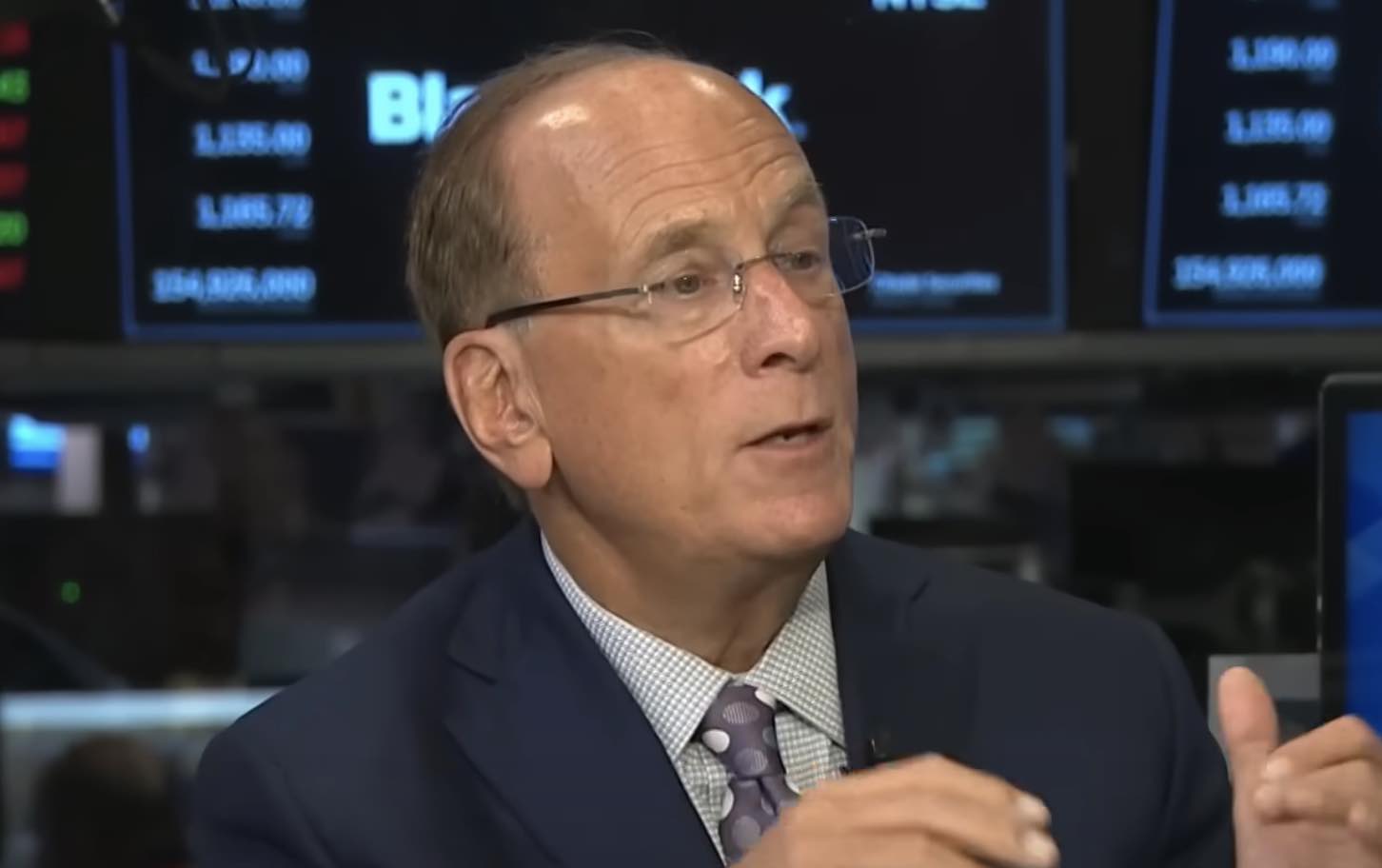
BlackRock Founder Larry Fink said last week on CNBC that we’re just at the beginning of tokenisation. But does he really believe in tokenisation? Talking about tokenising assets, he said (emphasis ours)…
“There’s $4.1trn sitting globally in wallets. A lot of that money is outside of the United States. If we could tokenise an ETF…we could have investors, who are just beginning to invest in markets through crypto. They’re investing in it but now we can get them into the more traditional, long-term retirement products.”
One way of interpreting that is, there is a lot of money that could be hard for BlackRock to access under normal circumstances, but with crypto they can.

Make mobile trading your competitive edge with DXtrade
A US-listed ETF, for example, is hard or even impossible to offer in the UK and EU to retail customers. This is because US issuers do not have to produce a KIID, a regulatory document that provides an overview of the investment product. UK and EU issuers do have to provide these, otherwise they can’t sell them to retail.
Similarly, if you are in a country like Nigeria or Argentina, you may find it hard to access a US ETF, purely because of capital controls that make it hard to swap local currency for the dollars you need to buy it.
But now imagine you can just buy a crypto ETF. Like USDT, it’s effectively a regulatory arbitrage method of getting access to a US investment product – you aren’t buying the real ETF, you’re buying something like a derivative of it. eToro used to do something very similar to this by offering an unleveraged CFD on US ETFs so that it could offer them to customers in the UK and other countries.
Note also that the US would have no reporting obligation for this. If you’re facing a US crypto broker as a customer, that broker has no obligation – in most cases – to tell your government you’re holding assets with them.

Give your prop firm a-book liquidity with FX-Edge
The other point Fink makes about bringing crypto investors into the regular markets sounds very similar to the logic which underpins ‘don’t call it a CFD, call it a perpetual’. If cryptoids want to stay in their own world, even though the product they’re buying is exactly the same (or inferior, as is usually the case) to what already exists, then just let them do it. Don’t try to fight the customer, just give them what they want – that’s the asset management way.
This to me suggests that tokenisation is not really about the technology or blockchain or any of that stuff. It’s just branding and a way to get around regulations – just like stablecoins and repackaging CFDs as perpetual futures.
Consequently, I am sceptical of the idea that Larry Fink really changed his mind about Bitcoin or is true believer in tokenisation technology.
The thing to remember about asset management workers is they are basically just higher brow market stall hawkers or tuktuk drivers. Yes, they wear suits and can speak (relatively) eloquently but ultimately they’ll just tell you what you want to hear so they can take your money. Fink sees more money to get into the BlackRock machine and churn out 50bps in fees per year, so now he is saying crypto is great.
Maybe I am wrong though and he is a true believer. If he is, then I am at a loss as to why. The main argument for tokenisation is that it makes more illiquid assets more liquid. But we already have a simple structure for this in the form of closed-ended funds.
When I was marketing these, we worked with funds that let the average person buy – on the London Stock Exchange – exposure to real estate, ships, forests, private equity, offices, windfarms, and toll roads, among other things. To top that off, markets are pretty liquid, you have security of funds, and various tax benefits. These funds have existed for more than 150 years.
To put that in low IQ terms, you can use closed-ended funds to get fast, easy access to illiquid (and liquid!) assets already and have been able to do so since before the American Civil War took place. So why do you need to tokenise anything and why are cryptoids making out like they’ve invented something new?
Most likely it’s a sign of how bad active asset managers are at marketing as they’ve failed to make it clear that you can do this. For cryptoids, it’s probably that they don’t know these things exist and they’re like a hammer desperately searching for a nail to justify their existence. Alternatively they know they exist but – like Larry Fink – they know their marks and reckon they can make some dineros flogging crypto bros ‘tokenised assets’.
Or maybe I am wrong? I am not being facetious – if you have a good argument for why this is meaningfully superior to closed-ended funds, send it. I am happy to publish it (if you want that to happen). Otherwise I will continue to just be confused as to what the point of these is, beyond just branding and regulatory arbitrage.