
Get more trading volume with cTrader
Everyone remembers ‘Lowdown’, the classic 2004 episode of detective show Law and Order.
It’s a tale of a lover spurned, closeted relationships, and puts a philosophical question to us, the highbrow viewer: who are we to tell someone the truth?
The episode’s most dramatic moment comes when Ice-T, who plays a detective on the hunt for the murderer, confronts one of the victim’s lovers.
“I am not gay!” the man shouts at him. “I have relationships with women, and sex with men.”
“I got news for you,” says Ice-T. “That means you’re gay.”

ATFX Connect: Partner with a real Prime of Prime today
I think about that line a lot whenever I see eToro.
That’s not because I’m gay (I have relationships with women) but because of the ripple effect that living a double life can lead you to have.
As we’ve looked at a million times here before, the basic model that loads of brokers now follow is that you pretend to be an investment platform, market low-value products and then cross-sell customers derivatives, which is where you make all your money.
If you’re in the US you do this with options, futures, and (now) event contracts. In the rest of the world you use CFDs.
eToro is unusual among the companies that operate with this model because of how far it is willing to go to pretend that it does not do it.

Prior to the company going public, it put out its prospectus. Although CFDs get a mention, it’s almost only for regulatory reasons and there is no breakdown of how much the company makes from the product.
This is remarkable when you consider that it’s probably the firm’s largest single contributor to revenues and was also the only product you could access on the company’s platform for the first decade of its existence.
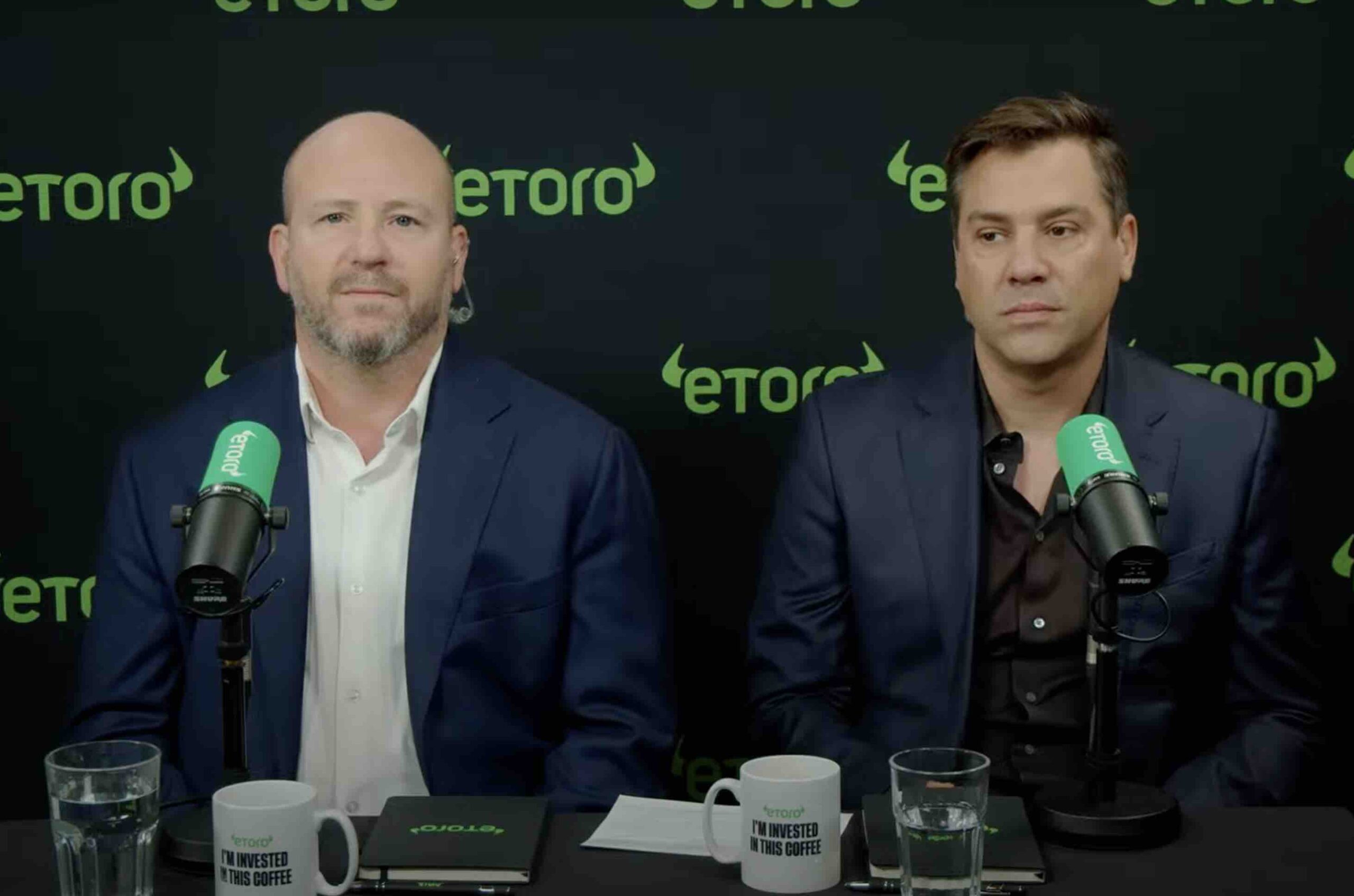
This continued last week when the broker put out its first set of quarterly results as a public company.
Aside from the refusal to say how much they make from one of their main products, the firm has an unusual way of breaking down its financials.

Get a Match-Trader server today
Firstly, it calls revenues ‘contributions’ – something I’ve never seen before. I have an idea as to why they might do this but we’ll get to that in a second.
Secondly, they book all their crypto desk’s revenue as a gross figure and then put it next to all their other trading revenues, which are (i) amalgamated into one and (ii) displayed as a net figure. The only reason I can see why you would do this is to optically inflate the crypto revenue figure to make it look like its your main revenue line.
By comparison, companies like XTB and Robinhood all do the ‘pretend to be an investment platform’ thing but they also realise their investors know what they’re doing, so give them the requisite information they need to make informed decisions about buying (or selling) their shares. For example, XTB clearly breaks down how much they’re making from CFDs. Robinhood does the same for options and crypto.
Why is eToro different?
I don’t know but my guess is that it has to do with the combination of their marketing strategy, product development, and PR efforts.
A lot of people think eToro is super innovative, which is partially true.
But to truly understand the company, I think of Gerald Ratner’s working philosophy, fine-tuned in the street markets of East London…
“the people who shout the loudest and appear to give the best offers sell the most.”
This is the eToro philosophy in a nutshell.
What eToro is exceptionally good at is identifying a trend, hopping on it quickly, and then shouting about it very, very loudly. Note, this is not a criticism. Adding new products quickly is hard, particularly if you’re a large organisation. Zuckerberg is very good at it, for example, which is partly why Facebook has been such a success.
Anyway, you can see one recent example of eToro’s ability to spot a trend with the earnings release they did, where the entire set up (live streamed on X and Youtube, with audience Q&A, and Yoni Assia presenting) was ripped off from what Robinhood did at the start of this month.
Another example is the company’s claim to be the first social trading platform. This is not actually true – companies like Covestor, KaChing, and ZuluTrade all existed before them. But eToro has been much better at shouting loudly about it and I guess it worked?
The problem with this is that sometimes what you’re saying – loudly all the time – does not actually match with your product and/or your wider business model.
For example, eToro was originally called RetailFX and didn’t add stocks for more than a decade after it was launched. Now its main marketing line is that it was founded to facilitate access to global markets.
Another good one is commission free investing. eToro saw Robinhood and Trading 212 doing this, then realised that it would be a good marketing tool so added the product and began shouting very loudly about it.
Then in about 2021 / 2022, they were trying to go public.
In the financials they published prior to that, they put all revenues under the header ‘Commissions’. And because they were so committed to pretending they weren’t a CFD platform, they also didn’t say those commissions were overwhelmingly from CFDs.
The result was they got hammered in a funny FT article about the contradiction of being a commission-free platform that makes all its money from commissions. Now you understand why they report all their revenues as ‘contributions’.
eToro’s problems here are compounded by the fact that it is simultaneously incredibly cagey about this stuff but also interacts a lot with the press. When you do more press work, you are liable to get hit more by the press.
Trading 212 and Plus500, for example, don’t have this problem because they just don’t talk to the media at all. Trading 212 used to but then they got wrecked by the FT and completely stopped doing it. They are making a bit of a comeback but we’ll see what happens.
The bottom line is that eToro’s PR and marketing strategies regularly contradict its revenue model. This is made worse by the fact that they seem completely obsessed with trying to hide this fact, even though no one, particularly investors, actually cares that much – they know what they are doing!
This is potentially a counterproductive strategy to engage in. Since starting TradeInformer, I’ve been able to talk with a few asset managers and family offices who have invested or are considering investing in publicly-traded companies in this industry.
Plus500 stands out as a company none of them would invest in because they don’t trust the people running the business. I don’t agree with that but the point remains that trust matters for investors and eToro could suffer the same fate. Clearly and obviously obfuscating how you make money is weird and does not make people trust you.
Having said that, it points to a wider phenomenon where many CFD providers seem ashamed of the fact they’re CFD providers. That will take a whole other article to look at.
But in the meantime, for any of you that do feel ashamed of who you are, remember that no matter how many relationships you have with stocks, it’s ok to make all your money from CFDs.
And when you finally do come to terms with who you are, just know that you’ve got one friend waiting for you with open arms. I accept you for who you truly are – not what the world wants you to be!