


The only derivatives trading strategies I have found compelling, apart from some sort of arbitrage, is tail risk hedging. The reason for that is, if you think markets are random and unpredictable, it’s pretty much the only strategy that makes sense.
Whether brokers realise it or not, they are often structured with the ‘markets are random and unpredictable’ hypothesis. You net off client flow, you have a risk limit, and you hedge when you hit the risk limit. This means you never take a view on the market, only that you are willing to take $x of risk on your book because you can afford to lose it. Pure b-book brokers either blow up or see huge P&L swings for the same reason – they are taking a view on the market.
However, I am but a simple wordcel and there are many shape rotators out there in the ether, with superior brain power to me, who think differently and who are already working on changing how dealing desks at brokers and prop firms operate.
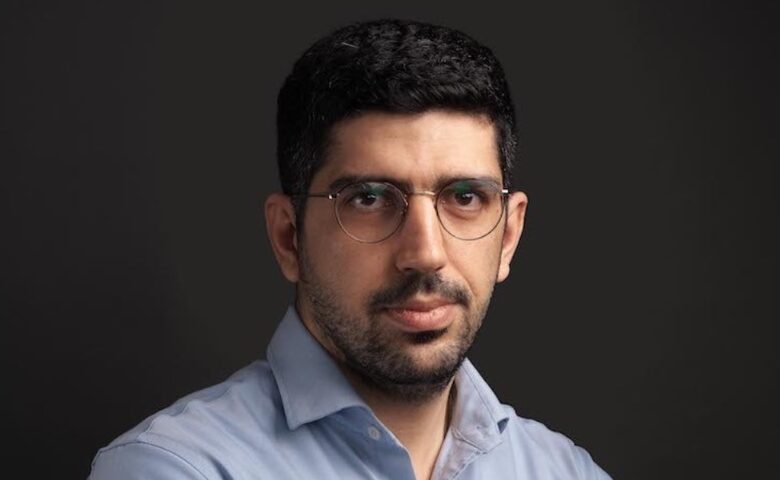
One such firm is Boltzmann Research, which was founded two years ago by Chariton Christou.
Christou was formerly Head of Quantitative Research at Tickmill and has a PhD in Computational Fluid Dynamics. Boltzmann runs an in-house fund but also supports brokers with outsourced dealing strategies and technology.
According to Christou, the firm averages an additional $250k per month to the bottom line of brokers it is working with. That is driven by firms generally making an additional $2 per million to $25 per million traded on a monthly basis, depending on the underlying asset. The firm already works with several companies regulated in Europe, the US and other jurisdictions.
“Our model works simply,” Christou told me. “We have no flat fee and only charge clients based on the additional P&L we generate. We run both models simultaneously, so a broker can see on their bridge what their P&L is with our model and what happens without it. We set firms up for free, so if they don’t like it, we just unplug ourselves from their systems. No one has asked us to do that yet.
“We only have a limited number of competitors but they lack the sophistication that we have and hence our models are not just less risky, but also more profitable as we operate within milliseconds, like most high frequency trading firms.”
The system that Christou says Boltzmann uses is similar, albeit on a smaller scale, to what you hear companies like XTX are doing. The company has its own GPUs, which it uses to train its models on vast reams of data. Those efforts have been aided by the company’s participation in AI-focused programmes run by leading cloud providers.
For me though, this is the crux of the question I have always found interesting about market making or any sort of quant-based strategy. Let’s say you train a model and it finds that 90% of the time in circumstance Y, the outcome will be that traders go long an asset. Is there a logical reason that should continue?
I have always been skeptical of that. But then if you look at what the likes of XTX or Citadel are doing, presumably they aren’t investing huge sums of cash in computing power just for fun. And given the sums of money they are making off the back of those investments, presumably their systems work.
At the same time, if you go to an event with any large, sophisticated LP, you’ll regularly hear them talk about custom liquidity pools and price optimisation. Presumably they are also doing that sort of price optimisation for their own benefit, so you would assume brokers can do the same for themselves.
According to Christou the process Boltzmann uses is primarily about optimising a broker’s pricing based on their own predictive models. This can mean, in some instances, showing tighter spreads to the end client, which still end up being more profitable for the broker.
“Imagine a situation where the broker’s raw pricing is showing gold trading at 3978.14 / 3978.40 ,” said Christou. “Our model predicts what will happen over the next few milliseconds and optimises the price to increase broker profitability.
“So the price is adjusted based on that prediction due to supply and demand dynamics. The spread is the same but it’s more optimised for broker interests. Our model is not right every time but the accuracy rate can be 80% and we usually do an additional $2-3 per million notional, although that can be much higher in certain instruments.”
The next logical question would be why brokers don’t do this themselves. One reason is cost – hiring people to engage in this kind of activity is expensive and time consuming. Plus you are competing with the big quant firms. XTX Markets, for example, recently announced it would pay interns $35,000 per month. When you add on the costs of buying and building GPU clusters, most brokers (understandably) don’t want to make the investment.
Another is more about priorities. Dealing desks are one part of a broker’s operations and, for many, they aren’t the ‘thing’ management wants to focus on. Management tend to look at new client numbers and FTDs, rather than trading teams. A lot of brokers don’t bother having a more sophisticated dealing operation as a result.
“Boltzmann’s goal is to fill the gap that exists between the quant world and retail brokers,” Christou told me. “If you are a PhD in statistics or physics, a quant firm is going to offer more money than a CFD broker – that’s the reality.
“Even if a broker is willing to pay, dealing is just not their main focus. Imagine if you are a quant firm – that’s all your management team will be focusing on because that’s all the company does. At a broker, there is marketing, sales, operations, compliance and so on. Dealing is one of many departments. We can offer a simple way to outsource a problem that brokers otherwise wouldn’t want to do in house or even think about.”
I don’t know about that final part as brokers have to think about dealing, whether they like it or not. That must have been the case this year, with so many bouts of volatility and ever-rising prices. I am sure many brokers fell to their knees and thanked god when gold crashed last month, for example.
But as that suggests, brokers tend to focus on dealing when there is a chance they will lose money. Maybe they need to start thinking about how they can make more money from dealing instead.