



Reach 11m+ traders with cTrader
Something we’ve looked at here a few times before is the idea that crypto is not about blockchain, decentralisation, or really anything related to its underlying technology.
It’s all just regulatory arbitrage and if most people in the world had easy access to ‘normal’ dollars, they probably wouldn’t use USDT.
The result is that US firms appear to be adding stablecoins so that they can onboard customers they would probably otherwise struggle to access.
One sign of this in the last week was that Interactive Brokers added stablecoins for deposits. It’s almost self-evident that there are very few people in the US that will use this service. If you are in Turkey or Lebanon then it’s a different story.

ATFX Connect gives your broker real prime of prime access
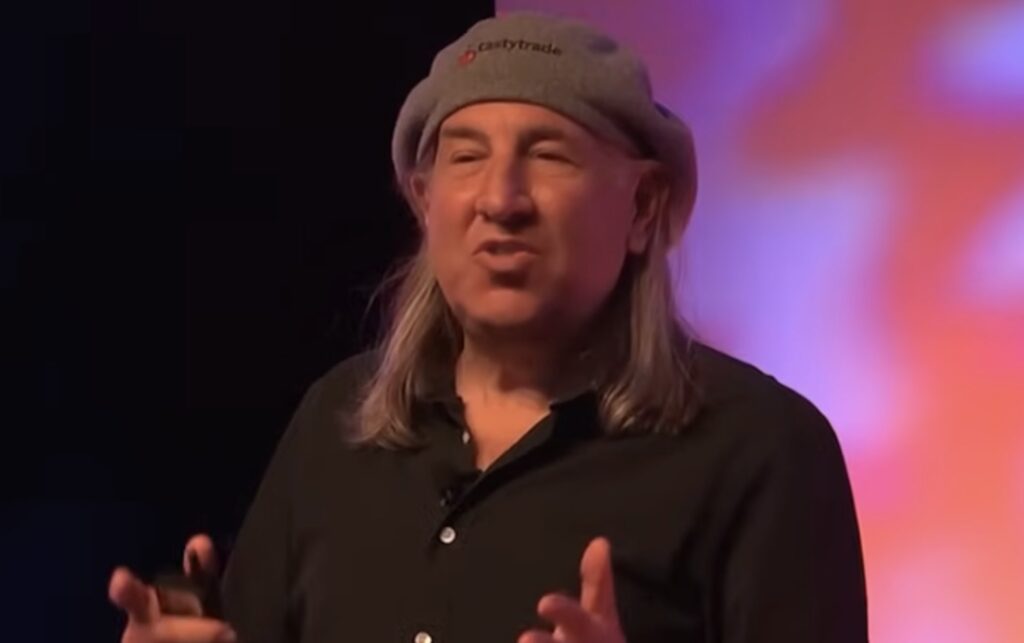
As if you needed evidence of that, last week Edward Woodford, who runs Zerohash, posted about tastytrade adding stablecoins. Zerohash provides the infrastructure that lets tastytrade and other brokers offer stablecoin deposits and margin facilities.
“Zerohash account funding with stablecoins lets brokers like tastytrade unlock instant, 24/7, global deposits,” wrote Woodford. “A key win is unlocking a new client base through global rails – in the last 60 days alone, tastytrade users have funded accounts from 50+ countries.”
The fact that tastytrade onboards from so many countries is a sign of how many of the big US futures and options brokers now do the same sort of marketing that Mauritius and Seychelles firms do to places like the UK and EU.

Hedge your Crypto CFD risk with Scope Prime
Not a problem for me, but – of course – if a CFD or other provider were to do the same to US customers, the CFTC would send the CIA to hunt them down, extradite them to the US, and destroy their life / company. Reverse solicitation for me but not for thee is the US motto – life’s not fair and all that.
The next part is that the US seems to be becoming more open to being a ‘hub’ for financial services. I have now heard multiple people in crypto and ETDs talk about how the current US administration wants to have global clients onboard with US entities. Stablecoins can play a big role in facilitating that.
If you look back prior to 9/11, it was not that hard for someone from a country like Argentina to open a US back account. After the PATRIOT Act was introduced in 2001 and then FATCA in 2010, it completely killed people’s ability to do this.

All the best brokers use Pelican for copy trading – why don’t you?
Those two things made the compliance burden and risk so high that there was no point in opening a US dollar bank account, unless the person or company was loaded.
Incidentally, this is also why small countries like Vanuatu also struggle to get US dollars – the compliance burden became so heavy that US banks simply refuse to provide services to them.
So the US effectively regulated foreign business out of existence. That led to stablecoins becoming popular and now the US wants that money back so they are letting people get around their own regulations by using them. Go figure.

Start using Centroid to manage your broker’s risk
ThinkMarkets hack
One thing that happened last week is that a Russian hacking group called Chaos listed more than 500gb of data related to ThinkMarkets for sale.
The hack appears to be real as an Aussie journalist at Cyber Daily accessed employee passports, customer details, HR records, and more. Crazy stuff.
The hackers appear to have published the news after trying to extort money from the firm.

Get access to deep liquidity and cutting edge connectivity with Hantec Prime
Without wanting to be a nark, it seems like the firm would have to report this to regulatory bodies in the UK, EU, and Australia.
In the meantime, the company is currently being backed by FC Capital, a private debt investor based in Australia.
How that loan impacts other ThinkMarkets entities is not clear to me, but for the UK entity, the loan is such that FC Capital could actually take control of the entire business and all of its assets if loans are not repaid.
We looked before at how ThinkMarkets had borrowed a lot in the run up to trying to go public. This lending may have filled the gap.