CME Group launched spot-quoted futures (SQFs) at the end of June this year and since then several firms, notably eToro, have added the product to their platforms.
Similar to perpetuals, they have smaller contract sizes, one year maturities and – as you can probably infer – trade at a spot price. Consequently they offer a lot of CFD-like features but trade on exchange.
There are currently six different contracts that traders can access, with bitcoin, ether, and four major US indices as the underlyings.
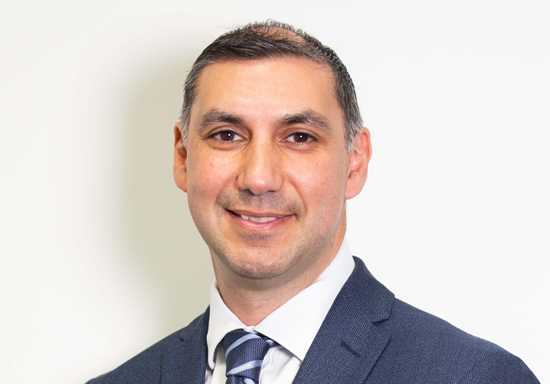
We spoke to Paul Woolman, Global Head of Equity Index Products at CME Group to find out why the exchange operator launched them, how the products work, and what the uptake for them has been like so far.
Why did CME Group decide to launch spot-quoted futures?
We’ve had a lot of success, I would say, appealing to the active retail trader. We started with micro e-mini futures about six years ago and we’ve seen fantastic success there, where we’ve traded several billion contracts.
The goal with SQFs was trying to think about what other products might appeal to the retail audience.
There’s been a lot of other products in other industries, particularly crypto, looking at perpetual formats. And when we’ve had feedback from active traders around futures, there are some elements which take a little bit of time to become more acquainted with, in terms of how futures work. So that includes the basis, that can include the fact that there’s a finite maturity to the product and the fact you need to roll positions over.
And so we looked at those factors and put them into coming up with the new spot futures product.
So it helps simplify things a bit?
Yes, one point is the smaller size of the contract, so that makes them more accessible to a wider audience in terms of how much money they might have to invest in a product. So that’s one element.
The second element really is this notion of being able to trade at a spot price. I think intuitively to many clients that might be easier than understanding why you are trading a product, which has a different price to its underlying and why there is a basis that exists.
And so being able to trade at the spot price is potentially more intuitive for clients to understand. I think that’s particularly important at the moment when you have more volatility and traders want to move in and out of positions quickly.
The third element is we extended the maturity of SQFs to one year. That’s what we’re starting with.
Many of our existing futures that we have today, including the micro mini futures, tend to trade on a quarterly contract cycle. And so every three months you have to roll the product. Again, that helps make the product more intuitive for traders.
Obviously there’s been this meteoric growth in options and futures trading among retail traders, particularly in the US and India. Are you seeing that in markets where you can trade OTC and there may be less reason to trade ETDs?
If we think about the existing futures, and options that we have, we have seen more and more retail clients trading those products, particularly the smaller size micro versions.
Is it outside of the US? Yes, there’s global demand. We see it trading around the clock.
And in terms of point of origin, they’re coming from all over the globe. So Europe, MENA, APAC – there is global retail demand for CME products.
SQFs are at an early stage but we’re seeing good traction. You’re seeing more than 100,000 contracts per day trading across the six products on offer.
I think that will only grow as more companies add the products and end clients understand what they are and how to use them.
Something you alluded to is the rise of perpetuals. These have proven really popular with traders globally. Are SQFs an attempt to keep up with that demand?
The large majority of perpetuals have traded on non-regulated exchanges. I think that’s a big differentiator for us. SQFs are a regulated, CFTC-approved product. That is a key differentiator and something traders are absolutely aware of and like about them.
The other point I’d make is that a lot of these companies offering perpetuals, leaving aside the fact they’re non-regulated, do not provide clarity on their infrastructure. There is a good chance you are facing the same exchange, who is also acting as market maker in those products.
We are not making markets in SQFs and taking the other side of trades. So I think that fact and the regulatory approvals we have, mean this is a much more attractive product for a lot of retail traders.
I believe eToro has added SQFs. Do you see other brokers looking to add the product, particularly outside of the US?
We’re in conversations with several retail brokers to add the product in and out of the US. What I’d say is that you see this growing trend towards more brokers adding exchange-traded derivatives in general. SQFs are another part of that, so I would be surprised if we don’t see more companies offering them over time.
You also have to remember that this product can help CFD brokers themselves because it can make hedging their own exposure much simpler than it would be with other futures products.
From my perspective, it looks like the US is becoming more and more open to speculative trading products and also operates with something like a ‘buyer beware’ mentality. In contrast, European regulators particularly are becoming increasingly restrictive. Obviously the first part is great for the CME’s US business but is it frustrating to deal with the second part?
I don’t have a strong opinion on that. It’s every jurisdiction’s right to decide what they believe is the correct regulation for the region they oversee.
A lot of CFD brokers understandably get addicted to the high revenues they can make offering a product OTC. With that being the case, is it an uphill battle to get brokers offering these products?
I think if you went back a decade, you would not say that a lot of retail traders wanted access to options. But 10 years on and you have huge demand for options trading among retail and I think the same phenomenon is now taking place in the futures markets.
These products also aren’t inherently opposed to each other, having one doesn’t negate the other. If clients want to have futures or options, that doesn’t mean they aren’t trading other products as well. So I think a lot of brokers are seeing that and realising it’s ultimately about giving clients what they want. There is demand for futures and options, which is why they’re adding them to their platforms.